
Iceland, Unvarnished: A Road Trip Through Wind, Water, and Wonder
By V.S. Journeys
I arrived in Iceland with a brand-new rain jacket and a cheap tripod I’d bought online, convinced I’d capture the northern lights in all their high-definition glory. The tripod broke on day two. The rain jacket, it turned out, was water-resistant, not waterproof — a crucial distinction I learned while standing under Skógafoss in a downpour of my own making. By the end of the trip, I’d abandoned all pretence of being a polished travel photographer and instead just stood in the wet, staring at things with my own imperfect eyes. That was the better decision.
This wasn’t a grand tour of every ring-road highlight. I had nine days, one rental car, and a loose plan to follow the south coast as far as Jökulsárlón, then loop back to Reykjavík for a northern lights chase that might or might not deliver.
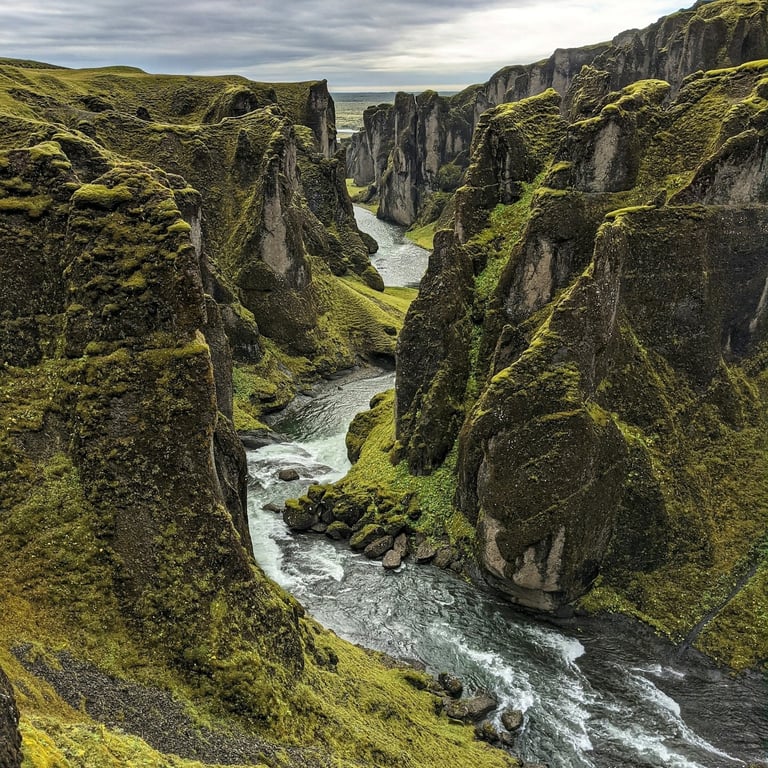
I drove roughly 1,800 kilometres, ate more gas-station hot dogs than I’ll admit, and learned that Iceland is both larger and more humbling than any photograph can convey.
Golden Circle: Better at 7am with Jet Lag
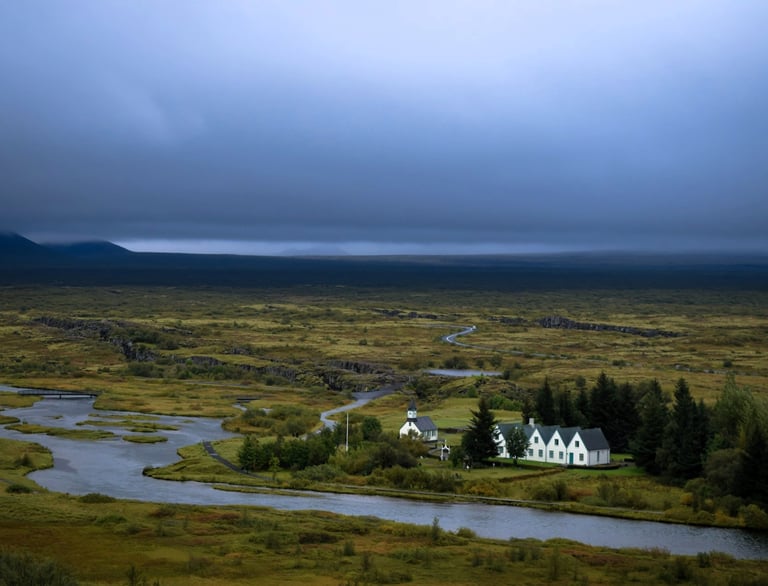
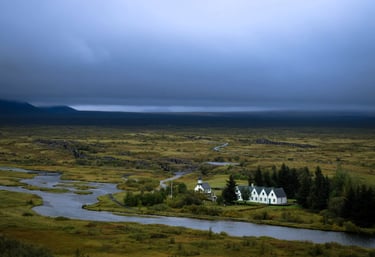
The Golden Circle is famous for a reason, but I quickly understood that timing is everything. I hit Þingvellir National Park at 7:30am, still slightly dizzy from a 3am landing. The car park was almost empty. I walked the path through the Almannagjá gorge alone, the lava walls dripping with moss, the North American and Eurasian plates pulling apart beneath my feet. The silence was so deep I could hear my own breathing. By the time I returned to the car at 10am, the coaches were pulling in and the spell was broken.
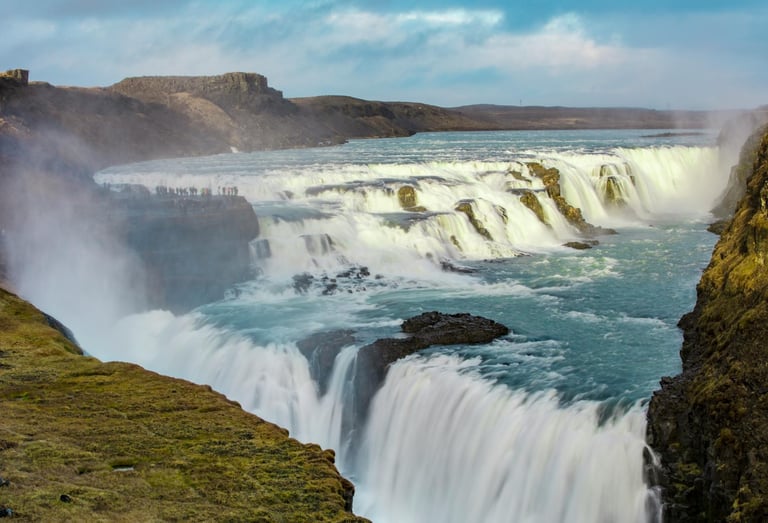
Strokkur geyser erupted while I was mid-sentence talking to a fellow traveller from Denmark. The ground thumped, a column of water shot skyward, and I yelped — a genuinely undignified sound. A few minutes later, the sky opened and hailstones the size of peas pelted us while we sprinted back to the car. I drove to Gullfoss with the heater on full blast and my trousers steaming. The waterfall, when I reached it, was a brute. The water thundered over the double drop, and a double rainbow arced across the canyon. I stood with my back to the wind, face stinging, and felt my jet-lag finally dissolve into something like awe.
South Coast: Waterfalls, a Plane Wreck I Skipped, and the Smell of Sulphur
The south coast is a procession of natural drama. Seljalandsfoss was the first waterfall I walked behind, the path slick with ice, the roar deafening, my useless rain jacket now fully saturated. An American couple asked me to take their photo, and I fumbled with their phone with numb fingers, apologising for the blur.


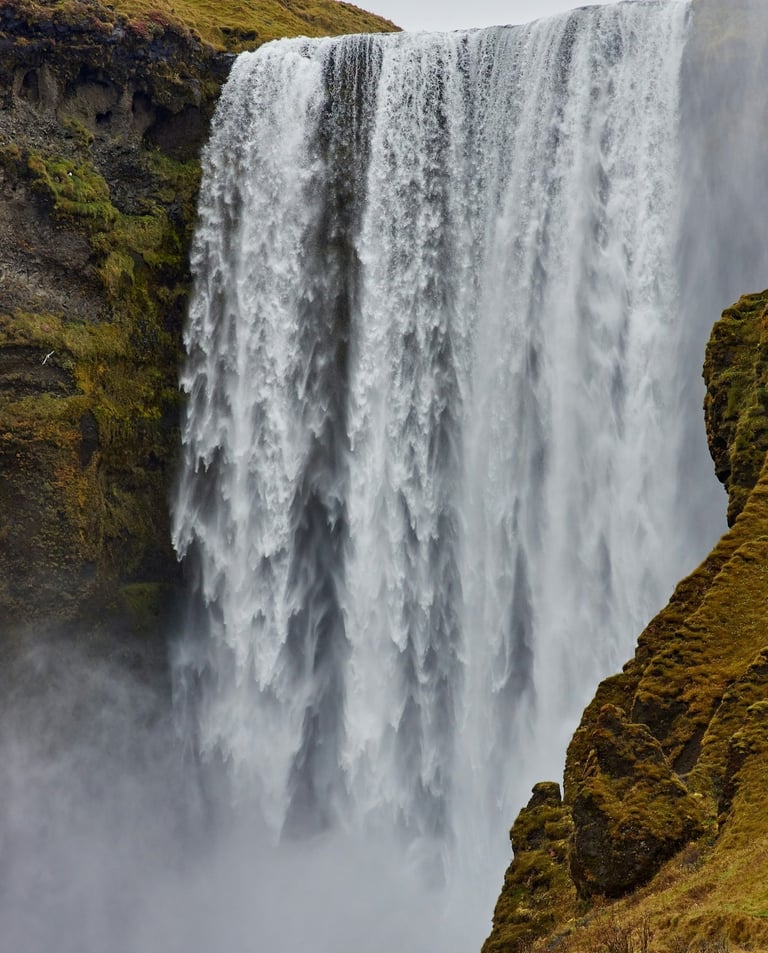
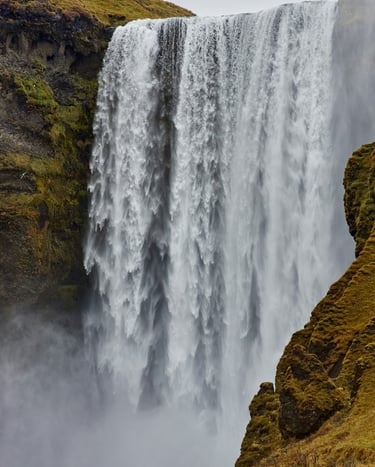
Skógafoss was less intimate and more overwhelming. I climbed the metal staircase — 427 steps, I counted, because counting distracted me from how much my legs hated me — and walked the first kilometre of the Fimmvörðuháls trail along the river above. The valley opened up, empty and green, with smaller cascades tumbling down the distant cliffs. I saw only three other people in two hours. That was the Iceland I’d come for: not the crowded viewpoints but the quiet paths beyond them.
I skipped the Sólheimasandur plane wreck. The car park was packed, and I’d read the walk was a flat, featureless trudge. I didn’t have the heart for it. Instead, I drove on to Dyrhólaey and watched puffins whirr past the cliffs like tiny, panicked helicopters. The wind was so strong I had to brace myself against a wooden post to stay upright.
Reynisfjara black sand beach was as beautiful as it was menacing. Basalt columns rose like organ pipes, and the frothing surf hissed over the black pebbles. I stayed far from the water’s edge, mindful of the sneaker waves that have killed people here. A sign near the car park had a tally of recent incidents. It’s impossible to read it and not feel a chill.
Glaciers, Icebergs, and the Long Drive East
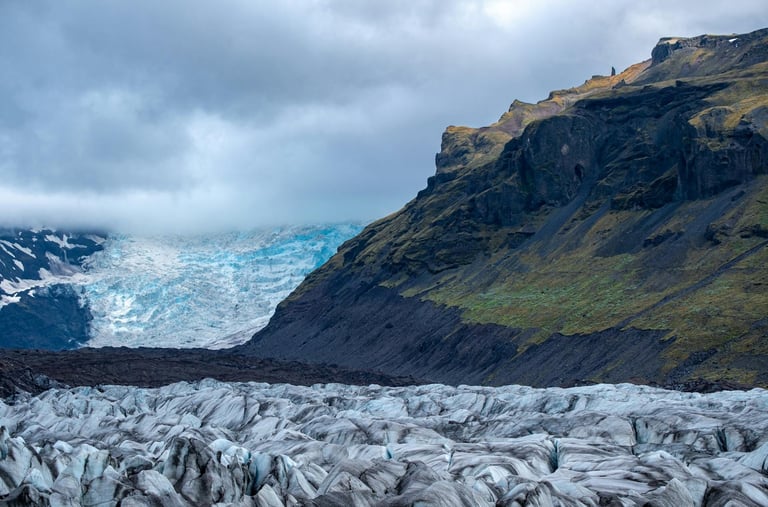
I’d booked a glacier hike on Sólheimajökull in advance. The crampons bit into the ice with a satisfying crunch, and our guide, a patient young Icelander named Elín, led us past crevasses and ash-streaked ridges. The glacier creaked. Elín tapped a black patch with her ice axe and explained it was volcanic ash from the 1918 Katla eruption, still working its way through the ice. I touched it. Cold, gritty, and a hundred years old.
At Jökulsárlón lagoon, I paid for a Zodiac boat tour that got me close enough to the icebergs to see the tiny air bubbles trapped in their blue depths.
The guide scooped a chunk of thousand-year-old ice from the water and passed it around. I held it to my ear and listened to it fizz.
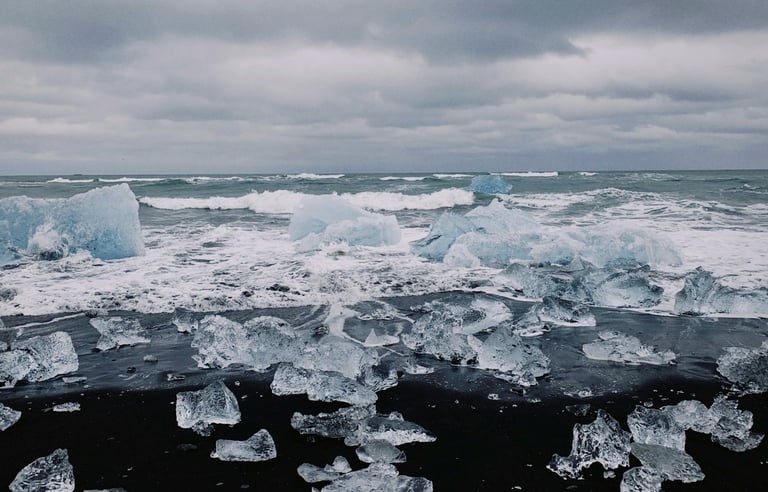
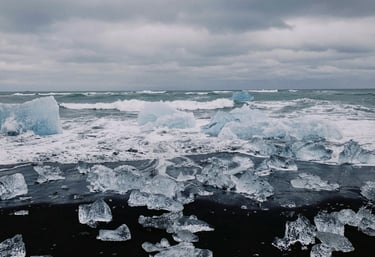
Across the road, Diamond Beach delivered exactly what the name promises: chunks of ice scattered on black sand, glinting like broken glass under the grey sky. I sat on a rock and watched a seal poke its head above the water, then vanish without ceremony.
The drive back to Reykjavík took five hours. I listened to Sigur Rós on the stereo and didn’t speak to anyone. The landscape flattened into moss-covered lava fields, then rose into mountains, then flattened again. It was the kind of drive that empties your head and fills it at the same time.
The Northern Lights: Three Failures and One Midnight Knock
I chased the aurora on four nights. The first three yielded nothing. Night one: cloud cover so thick I couldn’t see the moon. Night two: a faint, milky arc that I squinted at hopefully before my camera revealed it was light pollution from a town forty kilometres away. Night three: I stood in a frozen car park near Hella with a dozen other hopefuls, all of us checking our phones every thirty seconds. Nothing.
On the final night, staying at a farm guesthouse near Borgarnes, I’d given up. I was reading a battered paperback in bed when the owner’s son knocked on my door. “It’s starting,” he said. I pulled on my boots without lacing them, grabbed my jacket, and stumbled into the yard.
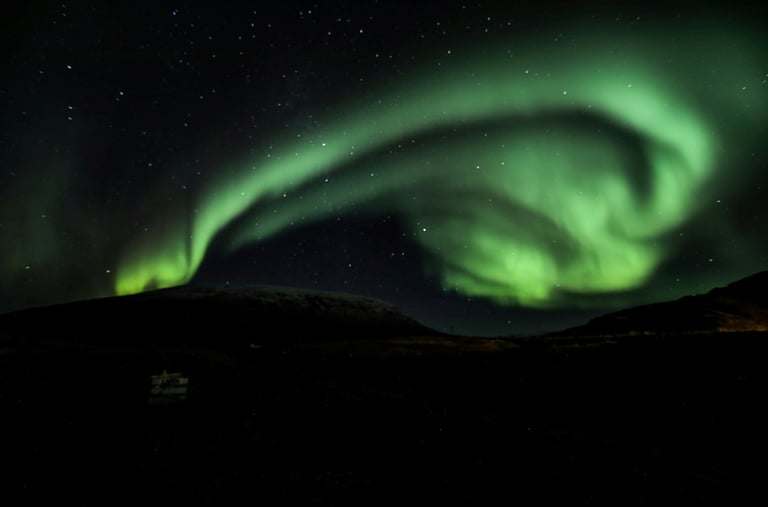
It wasn’t the brightest display — no swirling curtains of purple, no explosive coronas. But there it was: a long, pale green ribbon stretched across the sky, shifting slowly, as if breathing. I stood in the frozen grass, neck craned, and watched it pulse and fade for twenty minutes. No tripod, no camera. Just me and the quiet, luminous sky.
Reykjavík: Street Art, a Foul Shark, and the Best Hot Dog of My Life
Reykjavík isn’t a capital that screams for attention, and I liked it for that. I wandered the streets near Laugavegur, following murals that covered entire gable walls. I bought a lopapeysa (a traditional wool sweater) from a second-hand shop, not a tourist boutique, and wore it every day thereafter.
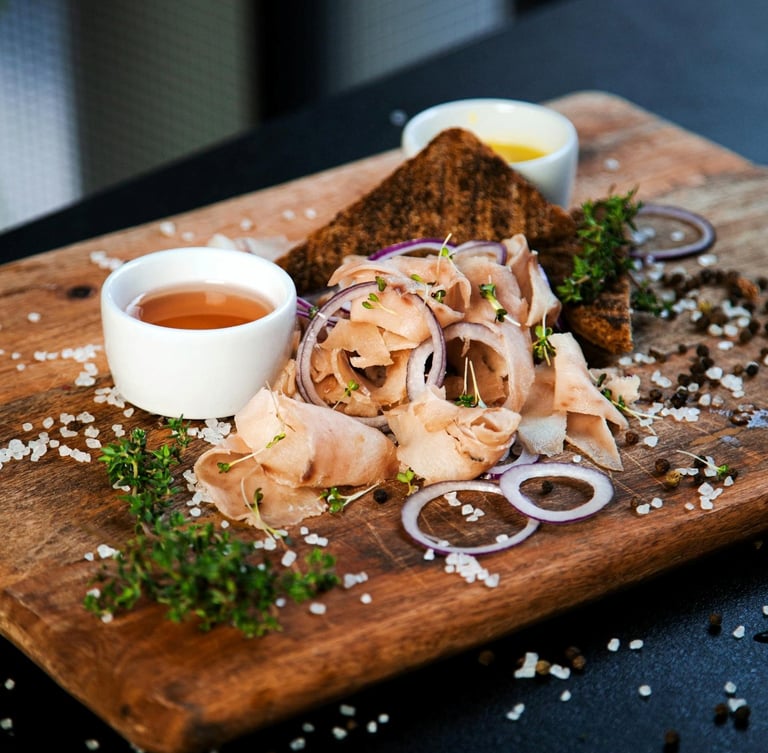
The food tour I’d booked was a mix of triumph and trauma. The lamb soup was rich and restorative. The rye bread ice cream was oddly delicious. And then came the hákarl — fermented Greenland shark — served in a tiny cube on a toothpick. The taste was ammonia, rubber, and regret, in that order. Our guide laughed and handed me a shot of brennivín, the local schnapps, to wash it down. The hot dog from Bæjarins Beztu, eaten fifteen minutes later in the drizzle, restored my faith in Icelandic cuisine. It cost 600 króna and was, without exaggeration, one of the best things I’ve ever eaten.
I left Iceland from Keflavík in the predawn dark, the terminal quiet, my boots still damp and my jumper smelling faintly of sulphur. I’d come hoping to capture the country in pixels and left instead with a cracked tripod, a few blurry photos, and the memory of standing alone under a green-lit sky, utterly content. Iceland hadn’t been the cinematic adventure I’d imagined. It had been better — real, raw, and entirely its own.



Practical Details
Visa: Iceland is in the Schengen Area. EU citizens can travel freely. UK, US, Canadian, and Australian passport holders can stay visa-free for up to 90 days within any 180-day period.
SIM cards & connectivity: Síminn, Vodafone, and Nova have kiosks at Keflavík Airport. I paid about €20 for a 10GB data package with Síminn. Coverage is excellent along the Ring Road and in towns; it becomes patchy in remote highland areas. Download offline maps before setting out for the day.
Getting around: Renting a car is essential for exploring beyond the capital. I used a local company and paid roughly €85/day for a 2WD vehicle with gravel protection (the minimum you need for paved roads in summer/autumn). Winter travellers should book a 4x4. Fuel is expensive — budget roughly €2.30 per litre. No Uber exists; taxis are scarce outside Reykjavík.
Safety & gear: The weather changes in minutes. I wore waterproof hiking boots, thermal base layers, a fleece, and a genuinely waterproof outer shell. A warm hat and gloves are wise year-round. Always check road.is for conditions and safetravel.is before heading out. Keep well back from cliff edges, geysers, and the surf at Reynisfjara — the warnings are not exaggerated.

When to go & what to pay to get there:
Summer (June–August): Midnight sun, open highland roads, puffins. Busier but everything is accessible.
Winter (November–March): Northern lights and ice caves; daylight is limited to 4–6 hours and roads may close.
Shoulder (May & September–October): A sweet spot combining decent weather, fewer crowds, and the possibility of aurora. I went in late September — it rained, it hailed, it shone, and I saw the lights once. Perfect.
Return flights to Keflavík (KEF) from Europe and the UK booked 6–12 weeks ahead typically cost: London £80–£250, Paris €100–€300, Berlin €120–€320, Amsterdam €130–€330, Copenhagen €100–€260. Budget airlines like PLAY and Wizz Air offer low base fares but charge for everything else.
Accommodation:
Reykjavík — Kex Hostel (social, quirky, former biscuit factory; dorms from €40, private rooms from €120). Splurge: Hotel Borg (Art Deco elegance, from €250).
Golden Circle area — Guesthouse Galtafell (peaceful, with excellent breakfast; doubles from €130).
Vík area — The Barn (modern hostel with mountain views; dorms from €45, private rooms from €140).
Höfn area — Guesthouse Húsabakki (quiet, clean, glacier lagoon views; doubles from €150).
West Iceland — Hótel Hafnarfjall (simple, friendly, good base for aurora watching; doubles from €120).
For Accommodation Ideas, Explore the Map Below
Budget note: Iceland is expensive. Plan on €150–250 per person per day for a mid-range road trip (car, fuel, accommodation, meals, and activities). Stock up at Bónus supermarkets and cook where possible to keep food costs down. And pack waterproofs that actually are. You’ll thank yourself.
All Rights Reserved
© www.affordabletravel4u.com
Travel Info
Travel Advice