
Málaga and the Southern Coast
Published by V.S. Journeys
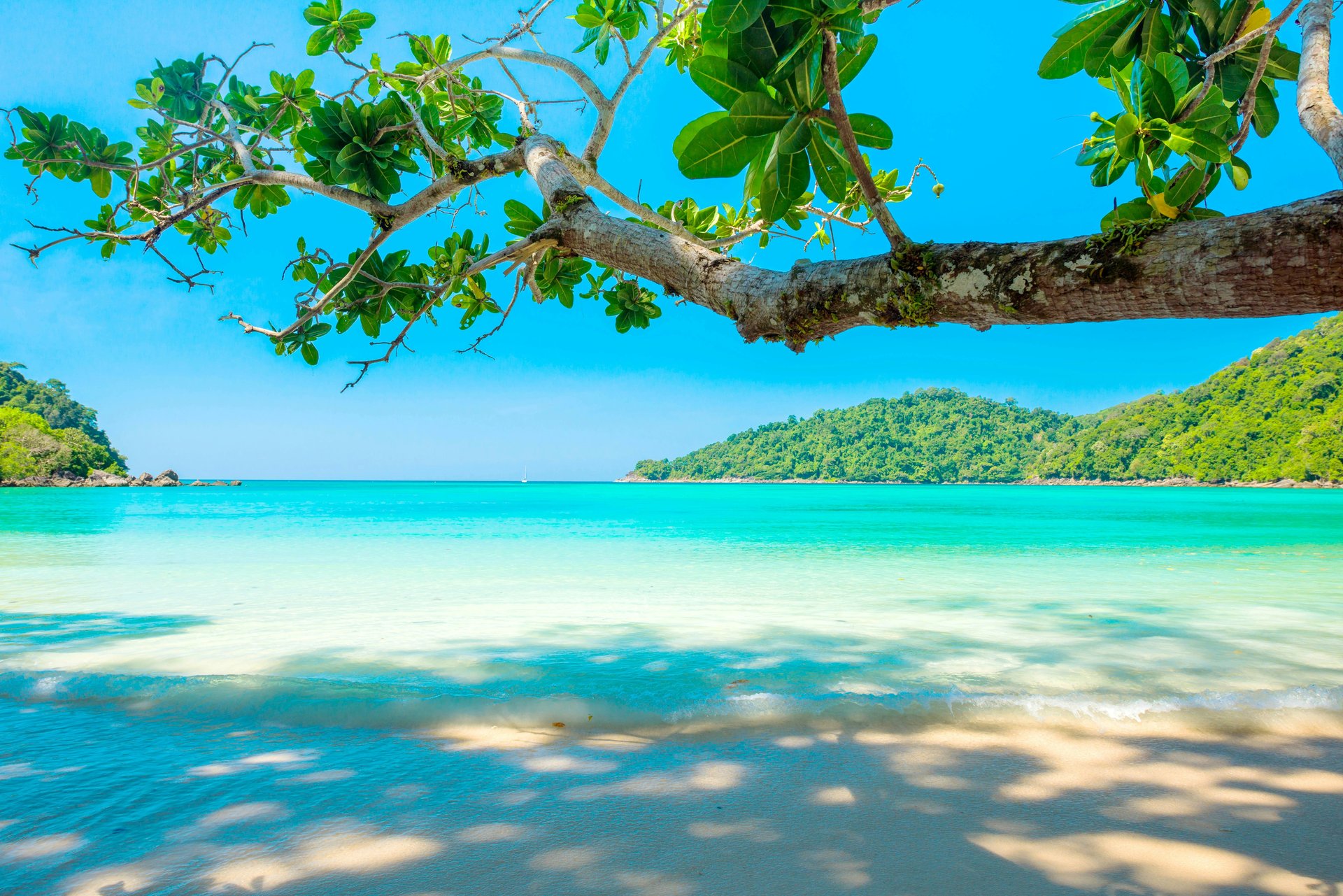
The light is different here. Not the sharp white of the Aegean or the honeyed gold of Cyprus. Málaga's light is warmer, heavier — it settles on the skin like a second layer. It softens the edges of buildings and turns the sea into something almost milky by midday.
This city does not need to sell itself. It has been here for 2,800 years. Phoenicians, Romans, Moors, and tourists have all passed through, and each left something behind. The result is a place that balances beach laziness with real depth — where you can spend the morning climbing a medieval fortress and the afternoon eating sardines cooked over driftwood, feet in the sand, without feeling like you've rushed either.
The Hilltop That Holds the City
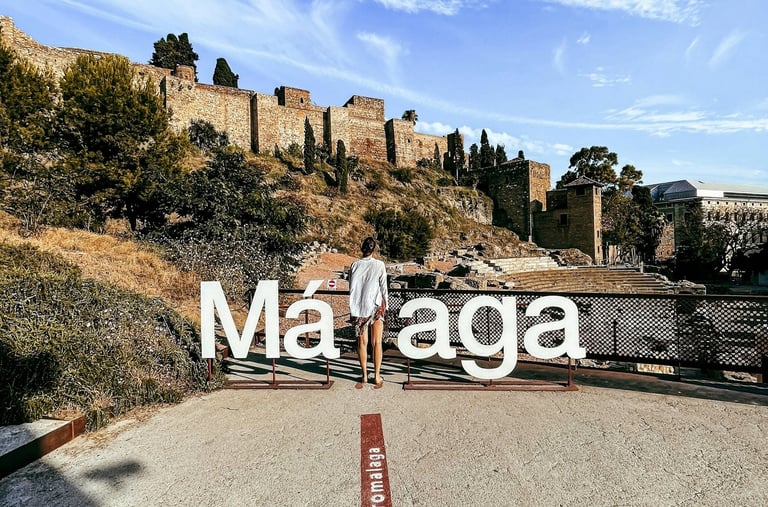
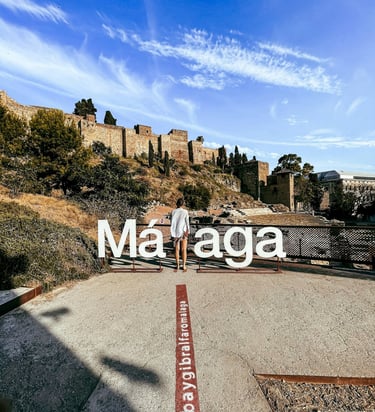
Gibralfaro Castle rises above Málaga like a stone ship. The walk up is steep — switchbacks cut into the hillside, shaded by pines that smell of resin and dust. Locals jog it before work. Tourists stop halfway, pretending to admire the view while catching their breath.
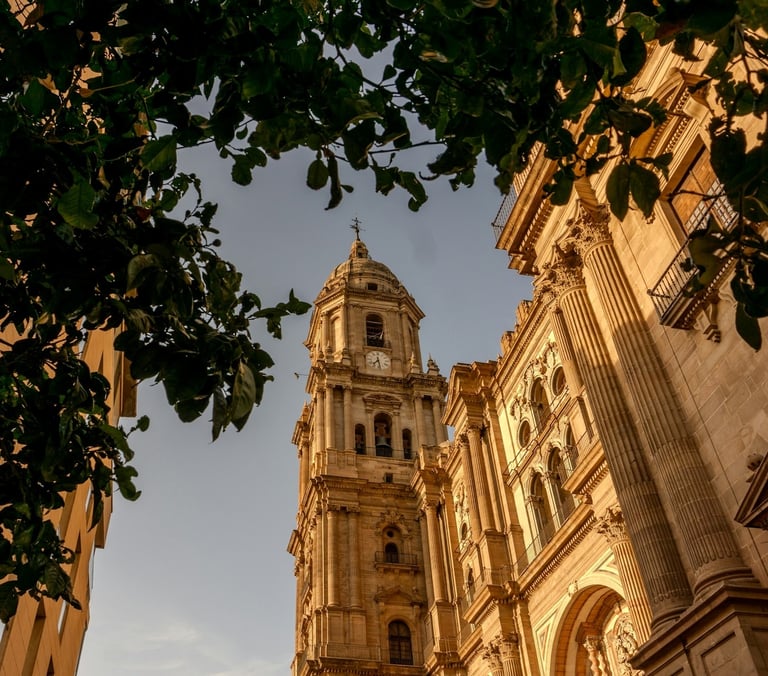
At the top, the city opens beneath you like a map. The harbour curves to the east. The Alcazaba sits lower on the ridge, connected to Gibralfaro by a walled corridor called la Coracha. The cathedral's unfinished tower punches up from the grid of old streets. Beyond it all, the Mediterranean stretches flat and hazy to the horizon.
The castle itself is mostly ruins now — walls without roofs, courtyards without fountains. But the views remain. And the silence up here, after the climb, feels like a reward.
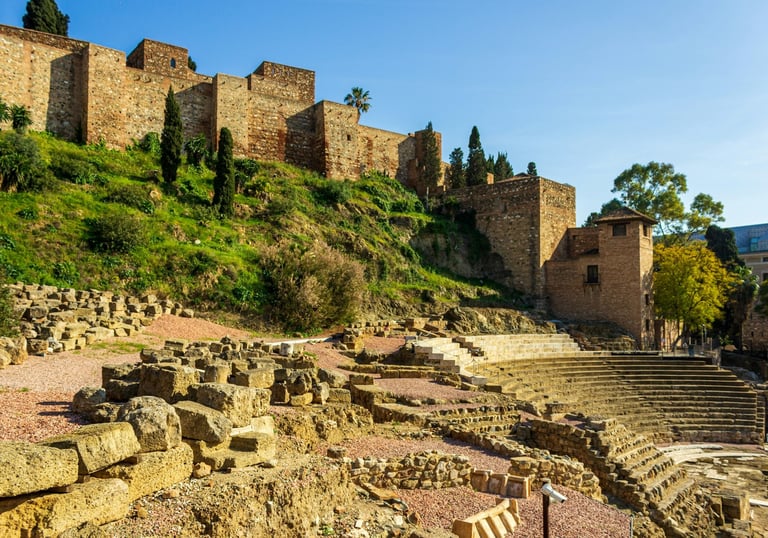
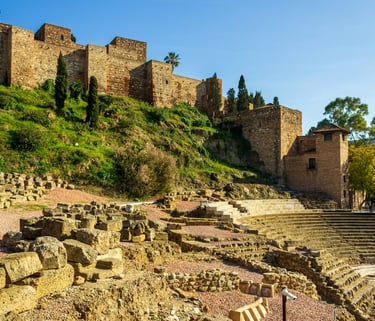
Below Gibralfaro, the Alcazaba waits. It is older than the castle — 11th century, built by the Moors as a palace-fortress. The entrance passes through a zigzag gate designed to slow invaders. Inside, gardens bloom where soldiers once drilled. A small Roman theatre sits at its feet, discovered only in the 1950s when a factory was demolished. The theatre had been buried for centuries, hidden under industrial buildings. Now it sits open to the sky again, its marble seats worn smooth by rain and time.
The City's Art Pulse
Picasso was born here. The city does not let you forget it, but not in a desperate way. There is a statue of him in the plaza. His name on the airport. And the Picasso Museum, tucked into a 16th-century palace in the old town, holds a collection that traces his arc from academic boyhood to the fractured faces of Cubism.
The museum is quiet. The rooms are small. You can move through it in an hour, but you should not. Stand in front of Portrait of Paulo with a White Scarf. Notice the brushstrokes — quick, almost impatient. Then move to his later work, where the shapes break apart and reassemble. The distance between those two paintings is the distance of a lifetime.
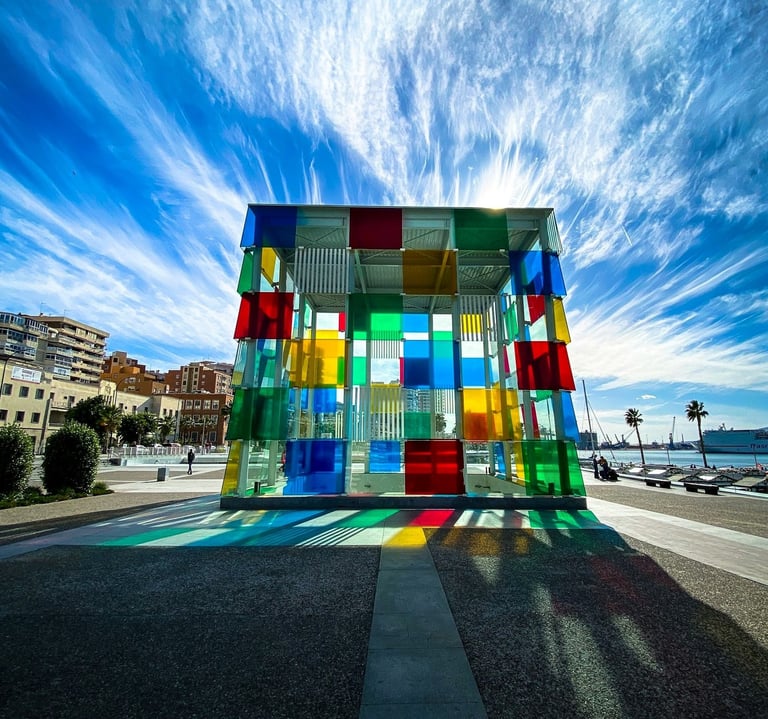
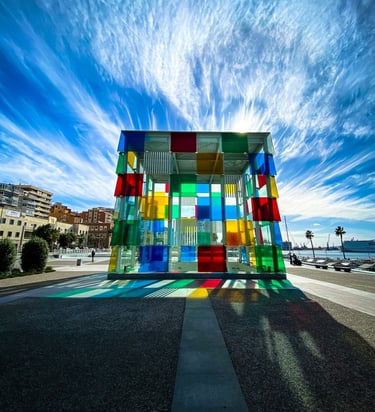
Across the city, the Pompidou Málaga offers something different. It is a branch of the Paris museum, set inside a modern glass cube that glows purple, blue, yellow, and red depending on the angle of the sun. The collection changes every few years. When you visit, you might see Miró, or Calder, or Frida Kahlo. You will definitely see something that makes you tilt your head and wonder what the artist was thinking.
The two museums sit differently in the city. Picasso feels like homecoming. Pompidou feels like a guest who arrived late but brought excellent wine.
What You Eat, and Where
Tapas here are not a trend. They are a system.
You walk into a bar. You order a beer or a glass of dry sherry. The bartender places a small plate on the counter — maybe olives, maybe a slice of tortilla, maybe a piece of bread with tomato and jamón. You eat. You drink. You order another. The bill stays low. The evening stretches.
For a proper meal, head to the harbour. The espeto de sardinas is Málaga's signature dish — sardines threaded onto bamboo skewers, planted in the sand beside a fire of driftwood, and grilled until the skin blisters. The smoke carries for blocks. You smell it before you see it. The fish come off the fire salty, oily, and so hot you burn your fingertips peeling them from the skewer. You eat them with bread and nothing else.
For something more substantial, find a chiringuito — a beachfront shack — and order pescaíto frito, a mixed platter of tiny fried fish. Anchovies. Red mullet. Small squid. Dusted in flour, dropped in hot olive oil, served with lemon. The crunch gives way to soft, sweet flesh. The salt makes you thirsty for more beer.
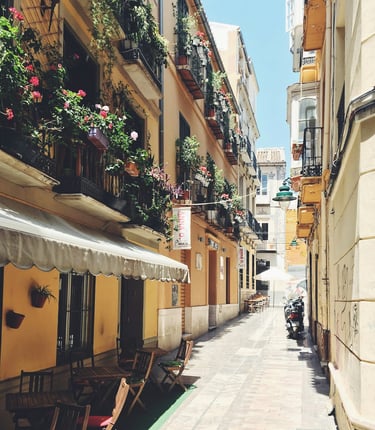
For Accommodation Ideas, Explore the Map Below
The Beaches, Sorted by Mood
La Malagueta is the city beach — wide, sandy, and lined with a promenade that fills with joggers at sunset and families on weekends. The water is calm. The sand is soft. The chiringuitos serve cold beer and grilled fish. It is not a secret. It is not trying to be. But when you want to swim and then walk five minutes to the old town for a glass of wine, La Malagueta works perfectly.
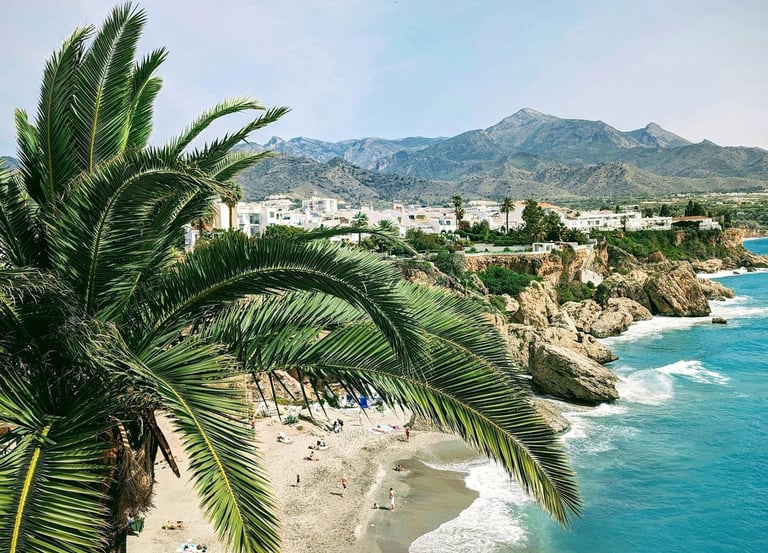
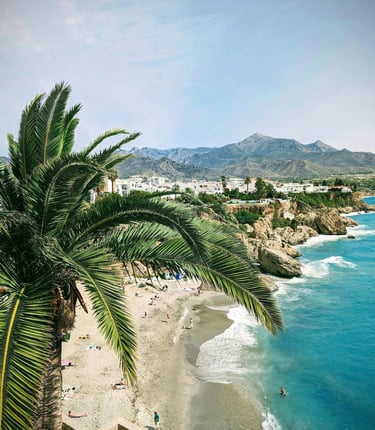
Playa Calahonda, near Nerja, is different. The beach sits in a pocket between cliffs, sheltered from winds that rake other parts of the coast. The sand is dark, almost volcanic. The water is clear and shallow for metres. You wade out slowly, the bottom soft under your feet. The cliffs frame the view so that the sea becomes a rectangle of blue between rock walls. It is the kind of beach you photograph, then put down the phone and just sit.
For families, Playa Cabopino near Marbella offers gentle water and dunes behind the sand where kids can run without disturbing other swimmers. For couples who want nothing but a towel and the sound of waves, Playa La Venus in Marbella's old town is small, pebbly, and rarely crowded.
White Villages and Cliffside Towns
The hills behind Málaga hold villages that seem assembled from sugar cubes. White walls. Red roofs. Narrow streets designed for donkeys and pedestrians, not cars.
You could spend a week driving between them. But two demand attention.
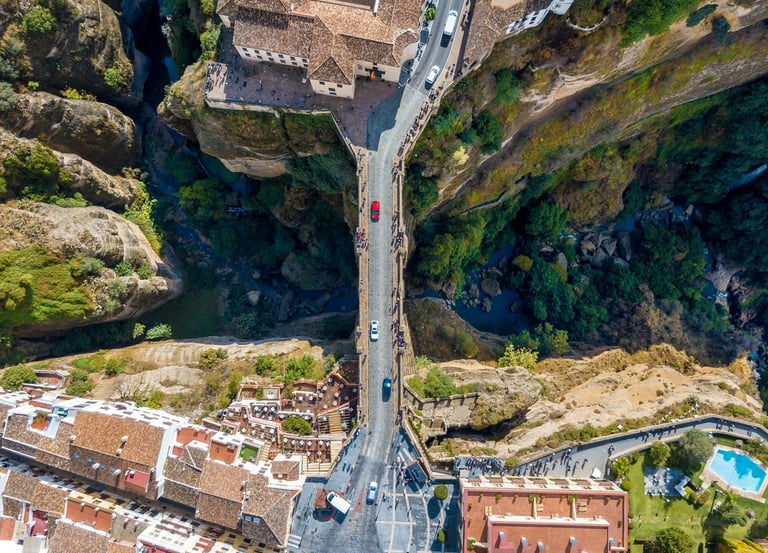
Ronda sits on a slab of rock split by the El Tajo gorge — a 100-metre cut so deep that the two halves of the town feel like separate worlds. The Puente Nuevo bridges the gap. It was completed in 1793, took 34 years to build, and looks like it will last another thousand. From the bridge, you look down at the river far below, thin and green, winding toward the sea.
The Plaza de Toros in Ronda is one of the oldest bullrings in Spain. Even if you have feelings about bullfighting, the architecture demands respect — whitewashed arches, yellow stone, a circle that holds the heat of the sun long after it has set. Hemingway spent time here. So did Orson Welles. Their ashes, some say, were scattered in the nearby countryside.
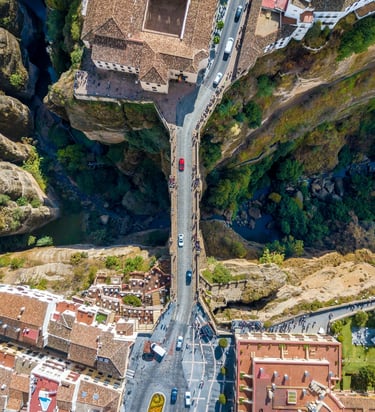
Below the town, the Arab Baths survive from the 13th century. Star-shaped openings in the ceiling let in light that falls in geometric patterns on the stone floors. You can still see the channels where water flowed — hot, warm, cold — following a Roman system adapted by Moorish engineers.
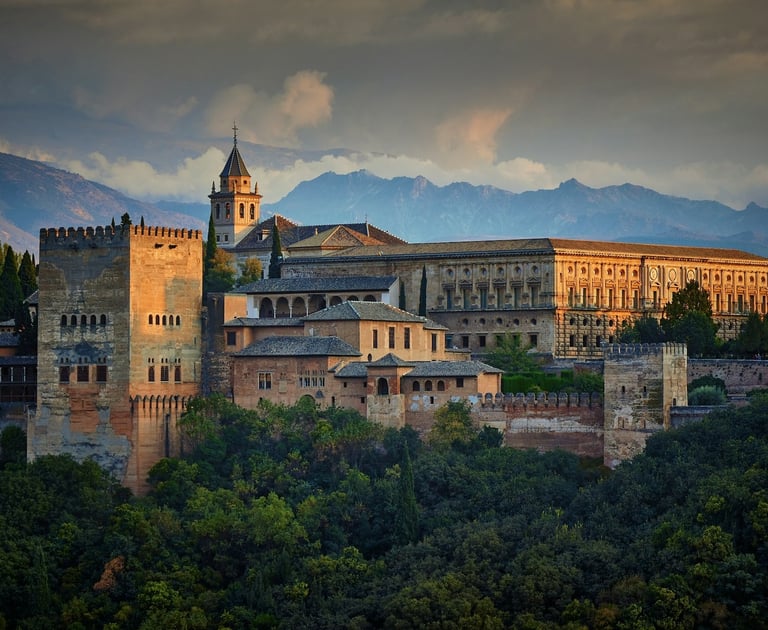
Granada is a full day from Málaga, but the Alhambra is worth the drive. The palace complex sits on a hill above the city, its red walls catching the afternoon light. Inside, the Nasrid Palaces offer rooms so intricately carved that the walls seem to breathe — Arabic script looping around geometric stars, plasterwork so fine it resembles lace. The Generalife gardens spill down the hillside in terraces of cypress and rose. Water runs everywhere. Fountains. Channels. Pools that reflect the sky. The Moors understood that gardens are not just planted; they are engineered for pleasure and peace.


El Caminito del Rey: The Path You Walk With Both Hands
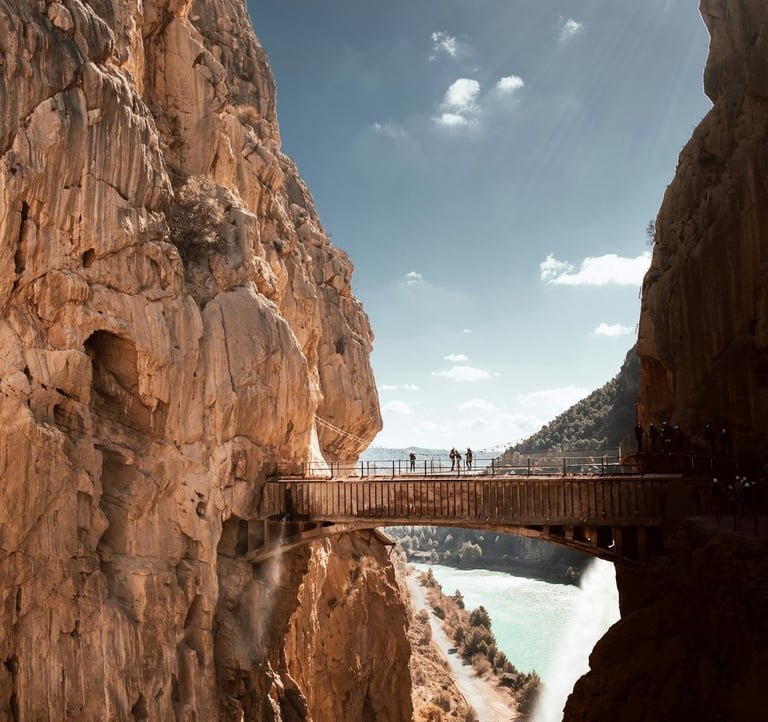
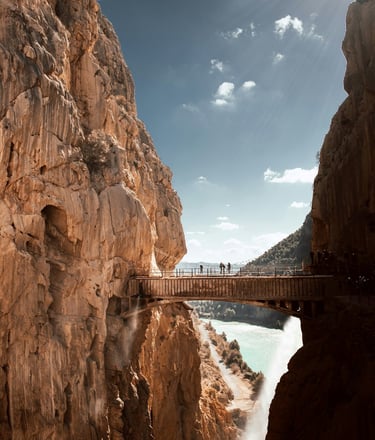
An hour from Málaga, the Caminito del Rey clings to a vertical wall of limestone. The name means "the King's Little Path," though the original was dangerous enough that dozens died before it was closed in the early 2000s.
The new walkway is safe. Steel handrails. Solid planks. A harness if you want one, though you likely will not need it. But the exposure remains. The path is bolted to the cliff face, suspended 100 metres above the Guadalhorce River. You walk with the rock on one side and open air on the other. The river below looks like a green thread. Buzzards circle at eye level.
The full route is 7.7 kilometres. Most people take 3 to 4 hours. The walkway section — the famous part — is only 3 kilometres. But the approach along a dirt track and the exit through a forested gorge add distance and variety.
Book tickets in advance. The path limits visitors per day. In spring and autumn, slots sell out weeks ahead. Wear shoes with grip. Bring water. Do not look down if heights trouble you. But if you can keep your eyes open, the views — the river winding through the canyon, the rock walls rising on both sides, the sense of being small in a landscape that does not care — will stay with you.
Gibraltar: A Day Trip to a Different Country
South from Málaga, past the airport and the border, a British rock rises from Spanish soil.
Gibraltar is odd. The Rock dominates everything — a limestone ridge 426 metres high, visible from miles away. On its eastern face, sheer cliffs drop to the sea. On the western side, the city of 30,000 people clings to the slope, speaking English, using pounds, serving fish and chips alongside tapas.
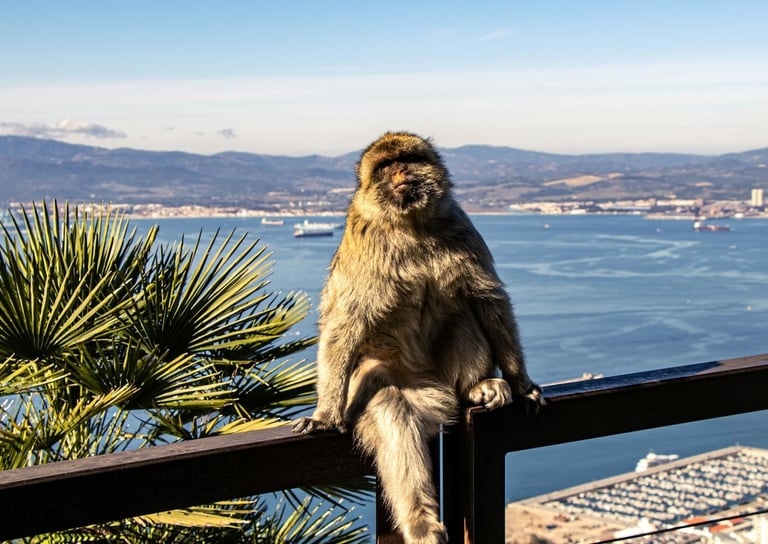
The Barbary macaques are the main attraction. They are the only wild monkeys in Europe. Legend says that Gibraltar will remain British as long as they survive. The legend is recent, invented for tourists. But the monkeys themselves are real, and they are thieves. They will take sunglasses, bags, and snacks if you let them. Watch from a distance. Do not feed them. Do not smile with your teeth showing — they read it as aggression.
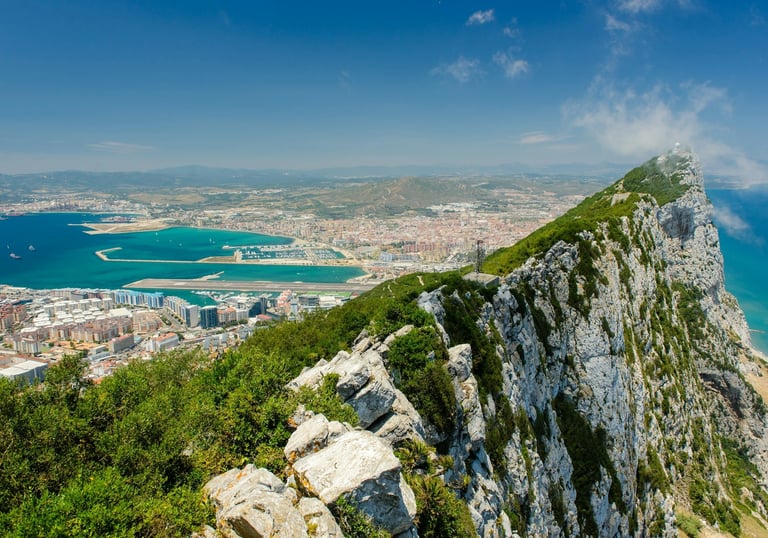
The cable car runs to the top of the Rock. From the summit, you look south across the Strait of Gibraltar to Morocco. On clear days, the Atlas Mountains appear as a smudge on the horizon. To the east, the Mediterranean stretches to the horizon. To the west, the Atlantic waits. You are standing at the narrowest point between two continents, on a rock that has been fought over for 3,000 years.
St. Michael's Cave cuts into the Rock's interior. The main chamber is vast, lit with coloured lights that feel theatrical but work. A concert hall has been built inside. Standing in the cave, hearing the drip of water and the echo of footsteps, you understand why the ancients considered these places sacred.
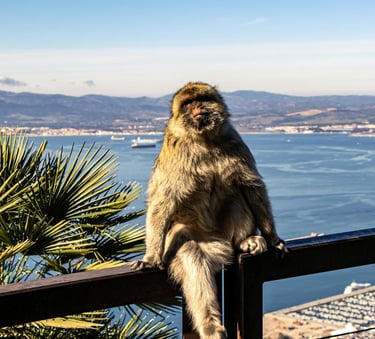
Europa Point is the southernmost tip. A lighthouse stands here. A mosque sits beside it. You can see Africa clearly on clear days. The wind is constant. The waves break against the rocks below. It feels like an ending — which it is, in a way. The Mediterranean ends here. The Atlantic begins.
When to Go and How to Move
Spring and autumn are the best seasons. March to May brings temperatures in the low 20s, wildflowers on the hillsides, and crowds that have not yet reached summer peaks. September to October offers warm seas, settled weather, and the grape harvest in the hills.
Summer is hot — often above 35°C. The beaches are crowded. The air shimmers over the roads. But the evening sea breezes arrive around six, and the city does not sleep until late. If you can handle heat, summer works. If you cannot, avoid July and August.
Winter is mild. Temperatures rarely drop below 12°C. The sun still shines most days. The beaches are empty. The hiking is excellent. If you want solitude and don't mind wearing a jacket, winter has its own quiet beauty.
Renting a car is the best way to explore beyond the city. The roads are good. Parking in Málaga's old town is difficult, so leave the car at a garage and walk. For towns like Ronda and Granada, a car gives you freedom. For Gibraltar, you can drive across the border — but the queues can be long. Parking on the Spanish side and walking across is often faster.

The City That Holds Its Centuries Without Nostalgia
Málaga does not mourn its past. It does not polish its ruins into museum pieces and charge admission for every corner. The Roman theatre sits beside a busy road. The Alcazaba rises above a car park. Picasso's birthplace is now a small museum on a plaza where children kick footballs and old men argue about football.
This is the city's gift. It does not separate its history from its daily life. The ancient and the modern exist in the same frame, and neither seems to mind.
You come for the sun. You stay for the sardines, the castle climb, the quiet of a white village at noon. You leave planning your return — not because you missed something, but because you want to feel that light again. That heavier, warmer, softer light.
It settles on your skin. It stays there, even after you have gone home.
All Rights Reserved
© www.affordabletravel4u.com
Travel Info
Travel Advice