
Madeira: Where the Atlantic Meets the Sky
By V.S. Journeys
You step off the plane. The air hits first — eucalyptus, salt, a coolness that doesn't belong to this latitude. Then you look up. The island tilts. Everything here has been pulled toward the sky.
Cliffs drop straight into the Atlantic. Forests grow on slopes that seem to defy gravity. Flowers spill over stone walls that were built by hand two centuries ago. The Portuguese called it Ilha Jardim — Garden Island — but that name misses the violence underneath the green. This is not a gentle place. It is a dramatic one. And once you've walked a Levada with a thousand-foot drop on one side and a rock wall on the other, you understand why some travellers come back ten times and still feel they've only seen half of it.
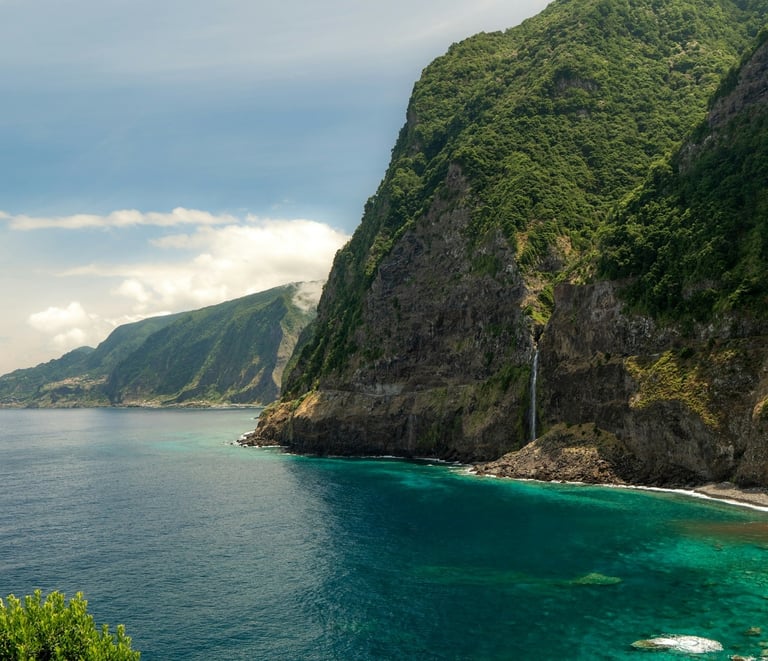
A holiday here does not follow a script. You might spend the morning tracing an ancient water channel through laurisilva forest, the afternoon descending from a mountain peak into a village where the old women still dry tomatoes on their balconies, and the evening eating grilled limpets at a harbour-side counter while the fishing boats rock against their moorings. It works for solo walkers, for couples who want beauty without crowds, for families who need more than a pool.
Where to Stay
Funchal curves around its bay like a white amphitheatre. Houses climb the hillsides in staggered rows. The higher you go, the older the buildings become — and the better the view of cruise ships sliding toward the harbour. The city has restaurants, markets, a cable car that lifts you out of the cobblestones and into cloud forest in fifteen minutes. It also has something rarer: a pace that does not hurry.
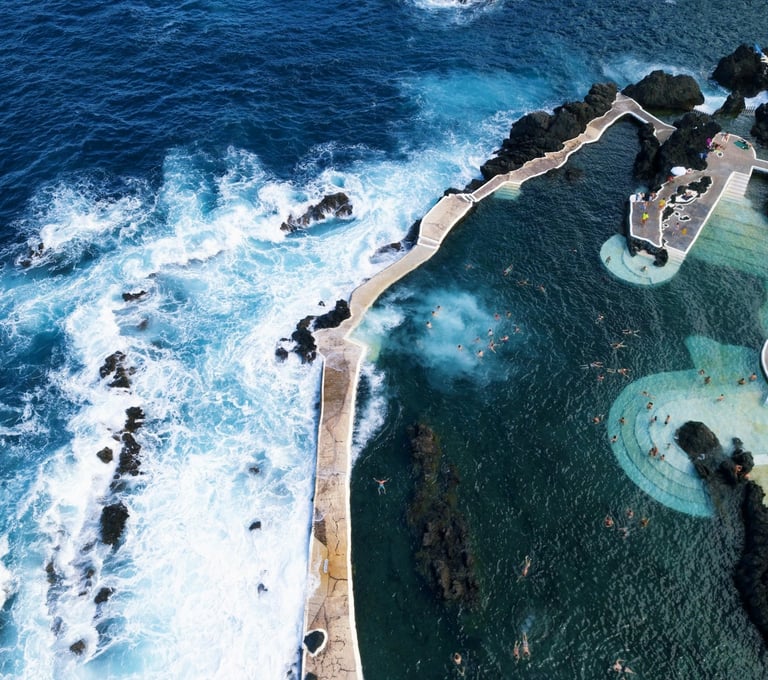
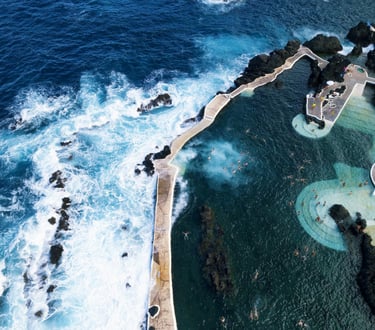
The south coast gets the sun. That's where most people sleep. But the north coast gets the Atlantic. The waves arrive without warning. Cliffs rise so steeply that some villages receive only three hours of direct sunlight in December. At Porto Moniz, lava once flowed to the sea and cooled into a series of natural swimming pools. The water sloshes in and out with every tide. You swim with your chin just above the surface. Beyond the rocks, the open ocean pounds against basalt.
Between them, Ponta do Sol and Calheta offer a middle path. Sun most of the day. A main street that empties after lunch. The kind of sleep you only get when the only sound is a distant rooster.
For Accommodation Ideas, Explore the Map Below
The Levadas: Walking Through the Island's Veins
In any other destination, irrigation channels would not be a draw. Here, they are the reason people book flights.
The levadas are stone waterways built from the 16th century onward. Their purpose was simple: carry rain from the wet north to the agricultural land in the south. But the maintenance paths beside them became something else — a network of trails that cuts through the interior like corridors cut into a fortress.
Three thousand kilometres of them. Some wide enough for two people. Some so narrow that you press your back against the rock wall while another walker passes. Most run through the Laurisilva forest — a remnant of the laurel woodlands that covered southern Europe before the ice ages.
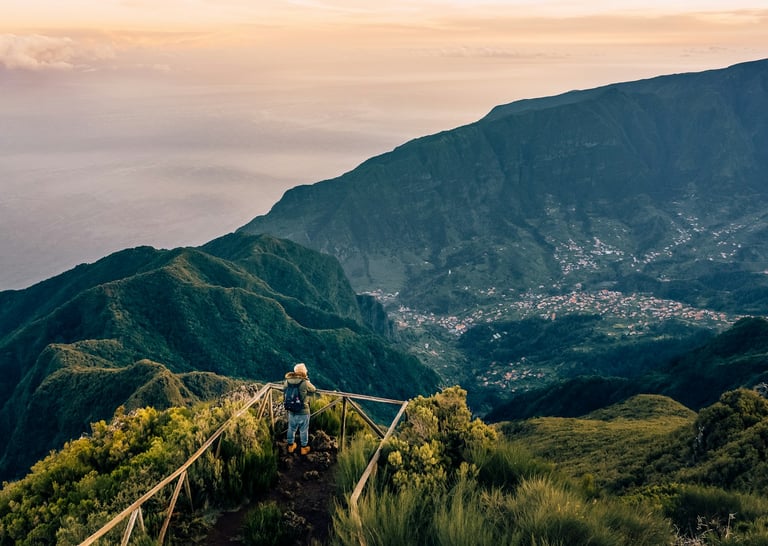
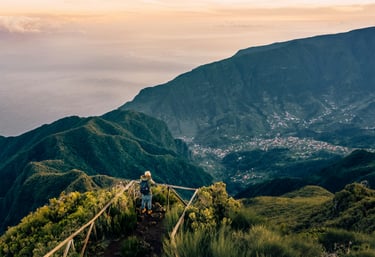
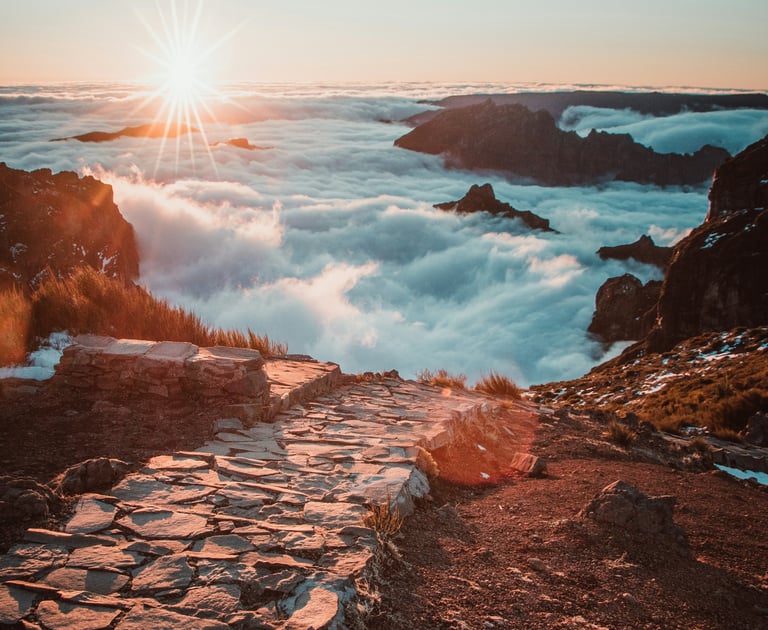
The Vereda do Arieiro to Pico Ruivo crossing is different. You park at 1,800 metres. Already above most of the island. The climb takes you higher. The vegetation thins, then disappears. Ground turns to bare rock. At the summit, you stand on the highest point in Madeira and look down at a carpet of clouds. Gaps open. Through them, the Atlantic shows itself — flat, grey, patient.
Ponta de São Lourenço feels like a different continent. Dry. Golden. Wind-scoured. The trail follows the spine of a headland with sea on both sides. No shade. No fresh water. Just rock, salt breeze, and the knowledge that this peninsula is the oldest part of the island — the part that has been eroding into the Atlantic for the longest time.
Funchal: City on a Hillside
The old town — Zona Velha — is a grid of narrow streets. Someone started painting the doors a few years ago. Now every door on Rua de Santa Maria is a different colour. Green, blue, red, yellow. Tourists photograph them. Locals ignore them. On any given evening, you'll hear fado drifting from an open window. A hinge that needs oil. A dog barking somewhere uphill.
The Mercado dos Lavradores was built in 1940. Art Deco lines. A formal facade. Inside, fishmongers call out prices in rapid Portuguese. Swordfish. Black scabbardfish. Tuna so red it looks like beef. The fruit stalls stack maracujá in purple pyramids, anona with their scaly green skin, pitanga like tiny orange lanterns. A woman offers you a slice of something you cannot name. You take it. It tastes of honey and flowers and something slightly bitter at the end.
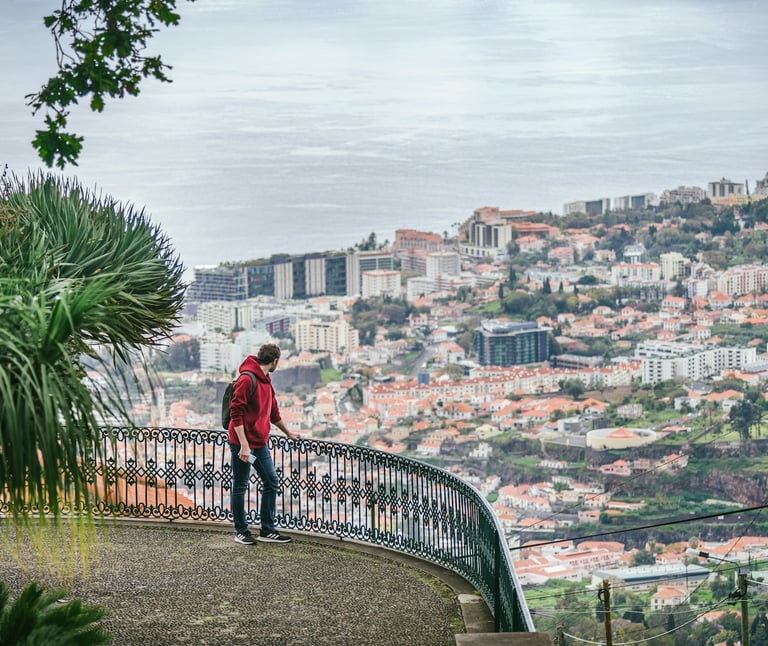


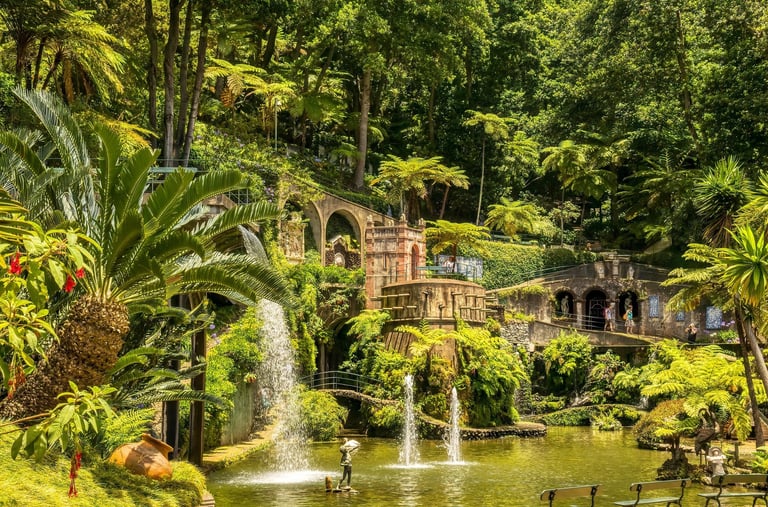
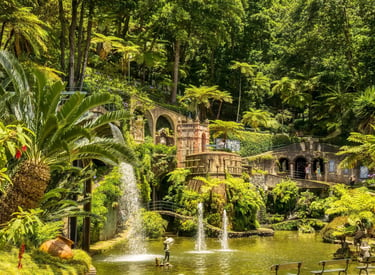
Above the city, the Monte Palace Tropical Garden occupies a former hotel site. Japanese stone lanterns. A koi pond. A collection of minerals from around the world that sits in a dark room and glows under soft lights. The cable car up takes seven minutes. The walk down through the garden takes an hour. The Monte toboggan — a wicker sled steered by two men in white uniforms — takes two minutes. It was originally a fast transport from the church down the hill. It is touristy. It is also genuinely thrilling. The men run alongside, then jump on, then lean hard into the curves. Your heart rate rises. The bay opens below you.
Madeira Wine: The Taste of Time
In the 17th century, barrels of fortified wine left Funchal for the Americas and the East Indies. They crossed the equator twice. They baked in hot holds. They sloshed through temperature swings that would ruin any other wine.
By the time they arrived, they were undrinkable. Except sometimes they were not. The heat and oxidation had transformed them. Nutty. Caramelised. Almost savoury. A wine that had been destroyed into something new.
Today, that process is reproduced deliberately. The wine is heated in cellars — estufas — for months or years. The result: a wine that, once opened, lasts for months rather than days. A glass of 10-year-old Verdelho tastes of dried apricot, toasted almond, and a faint salinity that makes you think of sea spray. A glass of Malmsey finishes like dark chocolate and coffee, with something volatile underneath — a restlessness that other dessert wines lack.
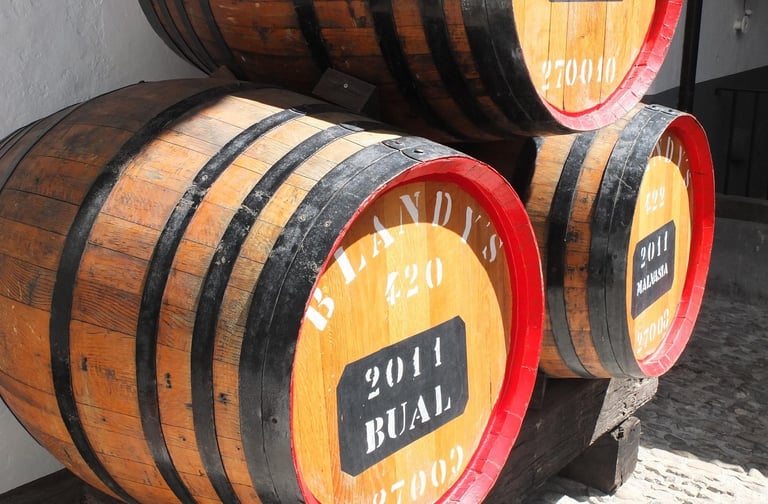
Visit a lodge in Funchal. Not for a tasting menu. Just stand in a room of old barrels. The air smells of oak and alcohol and time. Take a sip. The wine sits on your tongue for a moment, then opens.
Whale and Dolphin Watching
The Atlantic off Madeira drops to 3,000 metres within a few kilometres of the coast. Deep water close to shore. That means large animals pass near land.
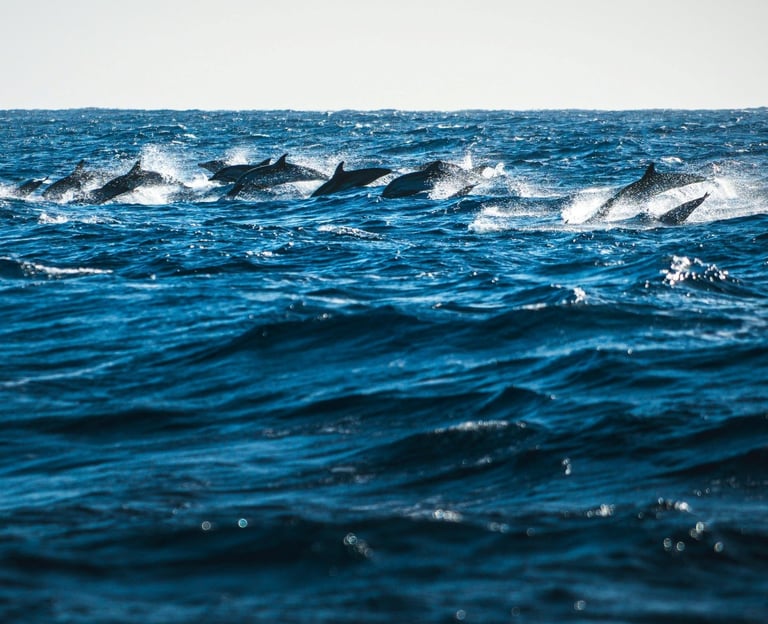
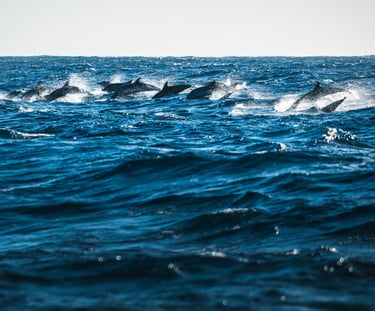
Short-beaked common dolphins appear in pods of fifty or more. They surf the bow wave. They leap. They turn their heads to look at you. Atlantic spotted dolphins roll on their sides, one eye above the water, one below. They do not seem afraid. They seem curious.
Between spring and autumn, larger animals pass through. A fin whale surfaces with a low blow that hangs in the air for ten seconds. Then it arches its back. Then the tail comes up, slow, deliberate, and the animal disappears for another seven minutes.
The boats operate from Funchal harbour. Most captains share sighting information by radio. You will see other boats. But when a dolphin throws itself three metres out of the water thirty feet from your bow, that stops mattering.
Beaches: Not What You Expect
Madeira does not have long strands of golden sand. That is not what this island offers.
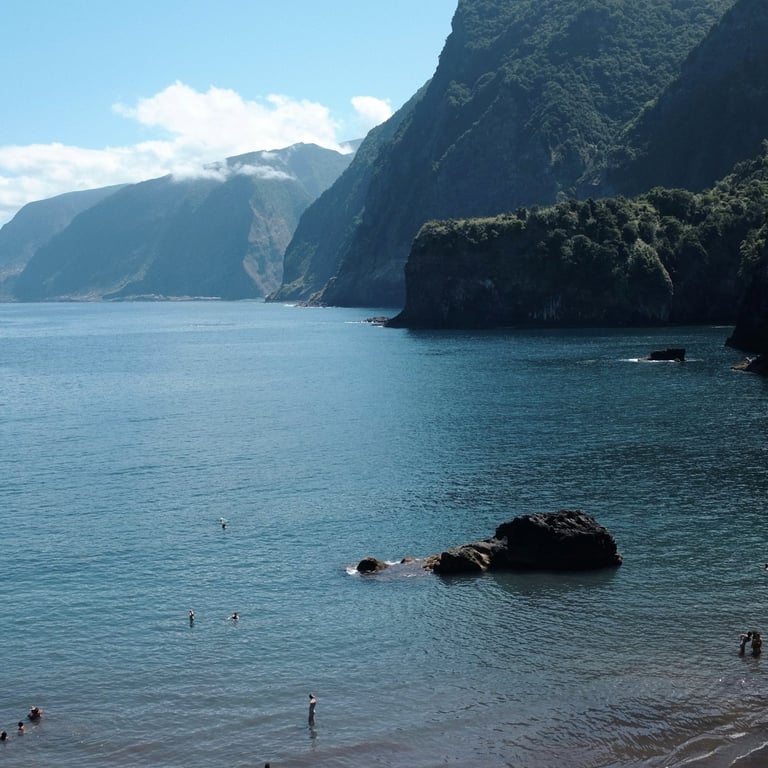
Porto do Seixal, on the north coast, is the exception. Black sand. Cliffs rising so high on both sides that the sun arrives late and leaves early. The water is clear. Calm on summer mornings. The setting is cinematic in a way that feels almost designed.
Elsewhere, you swim in lidos — seawater pools carved into the shoreline. The most famous are at Porto Moniz. Lava once flowed here and cooled into natural basins. The tide fills them. Drains them. Refills them. Swim at high tide, when the water is freshest. Watch the waves explode against the outer rocks. The spray rises twenty metres in the air. Then dry off. Walk to one of the restaurants overlooking the pools. Order grilled black scabbardfish with a slice of lemon. Watch the water. Do nothing else for an hour.
The Ponta Gorda lido in Funchal is more civilised. Saltwater pools. Sun decks. A bar. But the natural pools are where Madeira stops pretending. It does not need to be another beach destination. It already has something stranger.
Gardens and the Laurisilva Forest
The botanical garden in Funchal is worth a morning, especially if you take the cable car down from Monte and walk through. But it is a cultivated garden. Planted. Curated.
The Laurisilva forest is not.
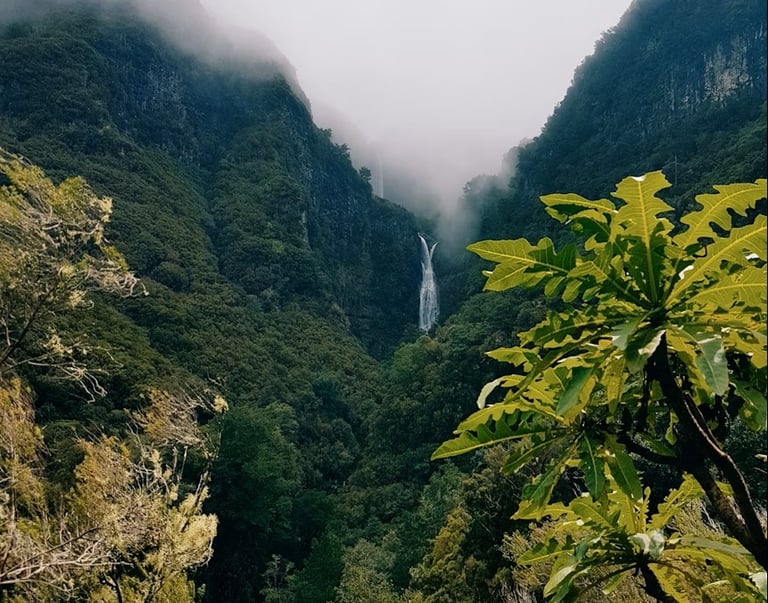
Fifteen million years ago, laurel forests covered much of southern Europe. Then the ice ages came. The Mediterranean dried. The forests retreated. Here, on this archipelago, a remnant survived. The trees are Laurus novocanariensis — laurels that grow tall and straight, with leaves that drip moisture. The understory is ferns, mosses, liverworts. The Madeiran firecrest moves through the canopy. The Trocaz pigeon calls from somewhere deep in the green.
Walking through Laurisilva feels different from walking through other forests. The light filters through the canopy in long green shafts. The air is cool even in August. The ground is soft underfoot — centuries of leaf litter, damp and yielding. And the silence is so complete that your own breathing sounds loud.
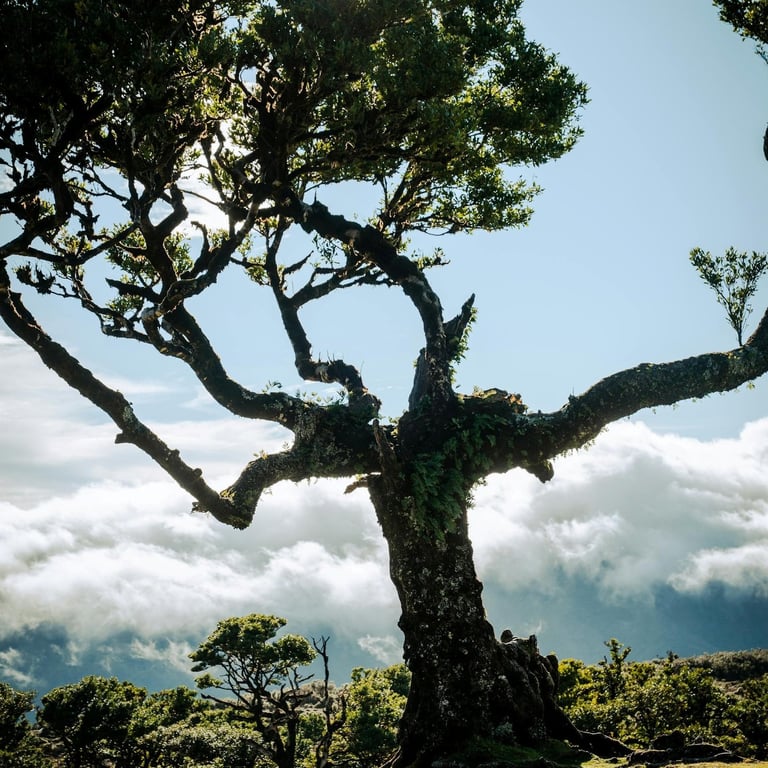
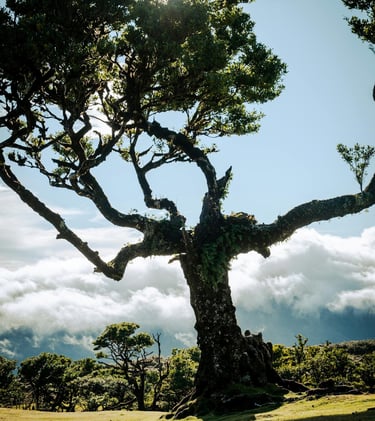
The best access is along the levadas in the north and centre. Ribeiro Frio. Queimadas. Fanal. At Fanal, ancient laurel trees grow on a high plateau. Mist rolls in most mornings. Photographers come at dawn and dusk. But the real experience is standing beneath a tree that was already old when Portuguese explorers first sighted this island in 1419. Its trunk is thick as a car. Its roots grip the volcanic soil. Its leaves make a sound like rain even when the sky is clear.
Weather Throughout the Year
The south coast, including Funchal, averages 22°C in summer and 17°C in winter. Rain comes in short, dramatic bursts — ten minutes of heavy water, then the sun returns.


The north coast is cooler. Wetter. Greener. The mountains in the centre catch the clouds. That is why the water flows. That is why the forest grows. That is why the levadas never run dry.
March to May is the sweet spot. Flowers blooming. Crowds thin. Temperatures ideal for walking.
June to August is warmer and busier. The sea is at its most inviting. Restaurants stay open later.
September to November offers settled weather. The harvest season for Madeira wine.
December to February is mild by European standards. Cool enough for a jacket. Rarely cold enough to stop you from sitting outside at lunch.
One oddity: the highest peaks sometimes hold snow in winter while the coast stays sunny. From Pico Ruivo in January, you can look down on Funchal bathed in winter light while standing on frost.
Why People Return
A single view does not make an island memorable. Nor does a single trail or meal.
What pulls people back to Madeira is the way the island holds its contradictions without resolution. Green forest and black rock. Calm seas and waves that explode against lava. Slow mornings in Funchal and high mountain winds that make you brace your feet.
You can walk three thousand kilometres of levadas. You will still leave trails unexplored. You can spend a morning at Fanal in perfect light. The mist will roll in differently next time. You can taste a dozen Madeira wines. There will always be another vintage, another lodge, another story about a barrel that crossed the equator three times.
Madeira does not need to impress you. It simply exists — patient, green, old, tilted toward the sky.
That is why people come back. Not because they finished. Because they left something unfinished.
All Rights Reserved
© www.affordabletravel4u.com
Travel Info
Travel Advice