
Sunburned, Scammed, and Starstruck: Egypt Travel Guide, Unfiltered
By V.S. Journeys
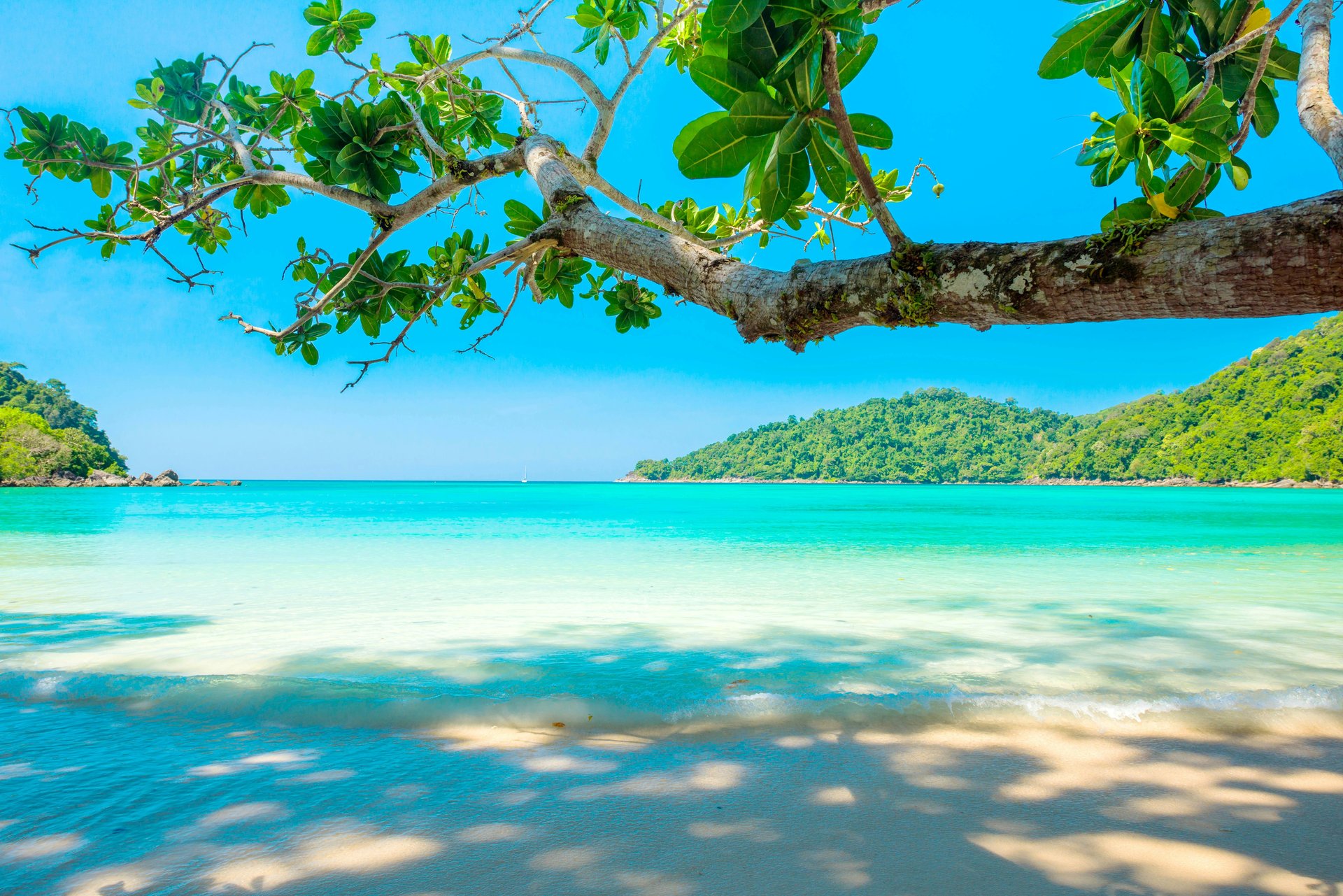
I landed at midnight, shirt already glued to my back, to discover the airport ATM had swallowed my card whole. A taxi driver with a tired smile took euros instead, the warm night wind whipped through the window, and by 12:30am I was barefoot on the hotel jetty, staring at water so ludicrously blue under the moon that I kept blinking, convinced my eyes were broken. The Red Sea hits you like that — not subtle, just a chemical brightness that makes you laugh at the sheer absurdity of it.
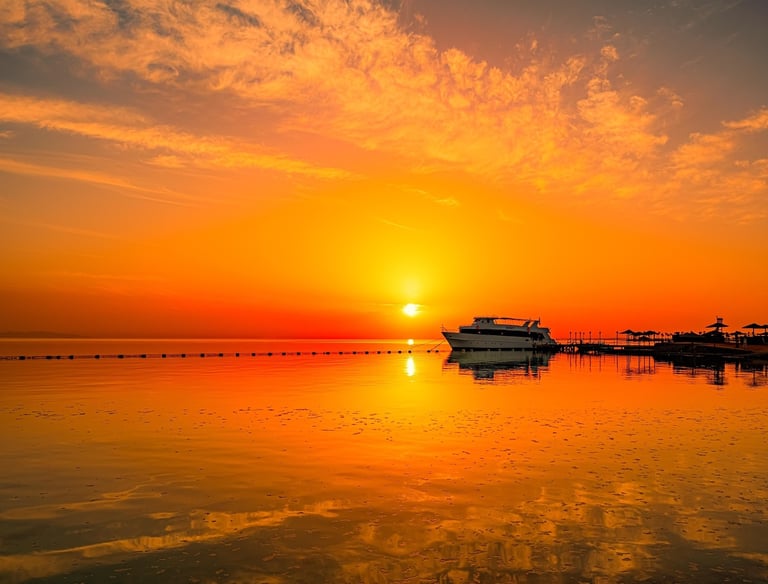
Hurghada is a strange beast. It’s a sprawling, sand-scuffed resort town where five-star all-inclusives rub shoulders with half-built concrete shells and the call to prayer drifts across pools playing lounge covers of Ed Sheeran. I spent ten days ricocheting between skin-tingling reef dives, desert silence, and the heat-blasted chaos of Cairo and Luxor. I came home with a sunburn that peeled for a week, a dodgy stomach for two days, and a head full of moments I still can’t quite put in order. Here’s what that chaos actually felt like.
Two Hurghadas, One Sunburn
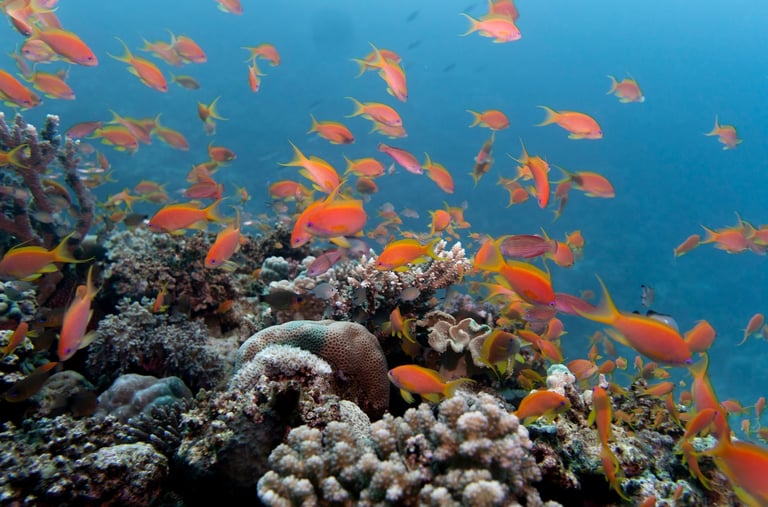
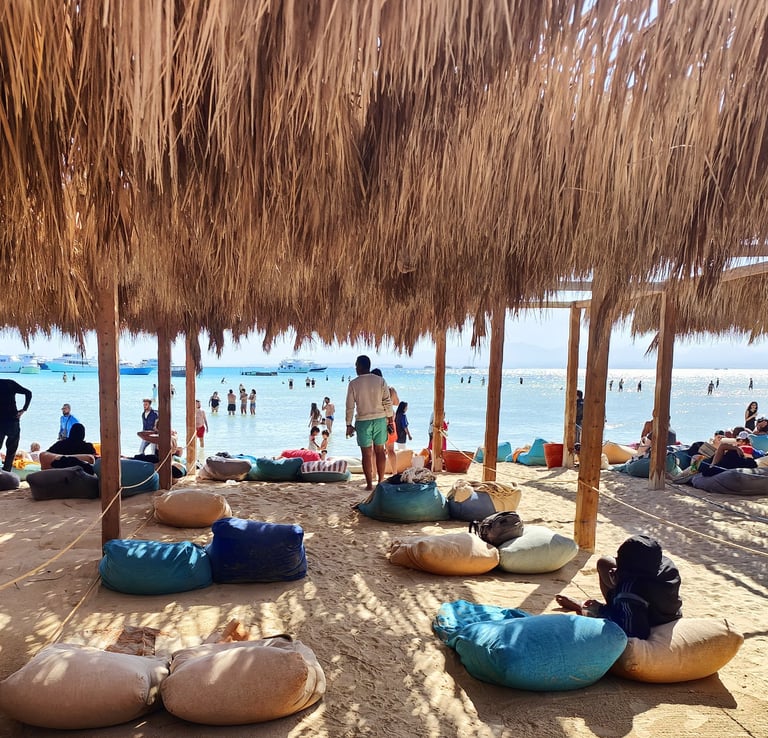
The resort strip is its own planet. Towels on loungers by 7am, swim-up bars, and jetty stairs that drop you straight into a world of angelfish and needle-thin trumpetfish. My first snorkel lasted three minutes before a parrotfish the size of a terrier cruised past my face and I choked on seawater, sputtering and laughing into the mask. Later, a day boat took me to Shaab el Erg, where the coral wall plunges into bottomless navy and a hawksbill turtle drifted past, paddling placidly, as if I weren’t worth the effort of swimming away.
But I wanted the Hurghada that didn’t come with a wristband.
El Dahar, the old town, smells of cumin, diesel, and oud. Market stalls stack copper lamps and fake designer t-shirts under bare bulbs. I tried to buy a scarf and instead found myself sitting on a plastic stool, drinking sweet tea while the shopkeeper explained, at generous length, why I should care about Mohamed Salah. I left with a scarf I didn’t need, 20 minutes of football gossip, and the distinct sense I’d overpaid by about two quid. The ritual felt less like shopping and more like being absorbed into a conversation everyone else already understood.
One meal I’ll remember forever: the unmarked seafood shack beside El Dahar’s fish market. I pointed at a red snapper still smelling of the sea, and the owner grilled it over charcoal while I sat on an upturned crate. The fish arrived split open, drenched in lemon and garlic, side by side with sayadieh rice — smoky, caramelised, studded with fried onions. It cost less than a glass of wine back home and utterly wrecked me for fancy restaurants.
Water, Height, and a Bloody Foot
A jet ski at full throttle over glass-flat sea is the closest I’ve come to pure, stupid joy. I held on too tight, swallowed half the Red Sea, and swore I could hear myself laughing even over the engine. By afternoon I was strapped into a parasailing harness, floating silently above the coastline, looking down on a patchwork of turquoise shallows and desert that, for once, I didn’t try to photograph.
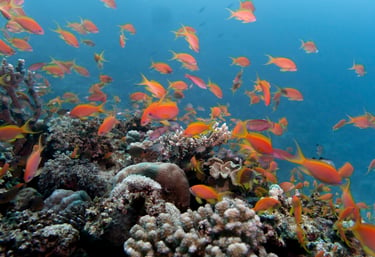
The boat trip to the Giftun Islands should have been the highlight. It was. But I also managed to slice my foot open on dead coral five minutes into the first snorkel because I’d left my fins on the deck like an amateur. Blood threaded through the water, embarrassingly bright. A deckhand sat me down, squeezed lemon onto the cut while I winced, and applied a plaster with a look of profound pity. The reef didn’t care about my dignity. It just shimmered on, clouds of anthias parting around me, a bluespotted ray flicking into deeper blue.
Dunes, Tea, and the Milky Way
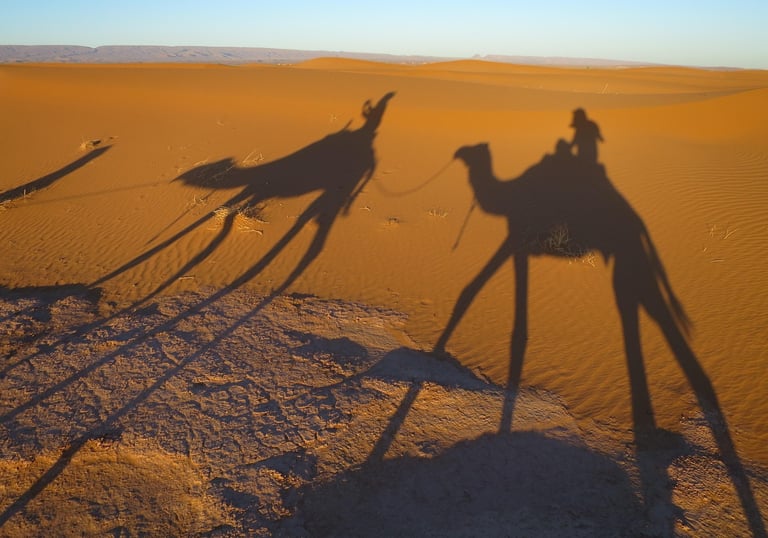
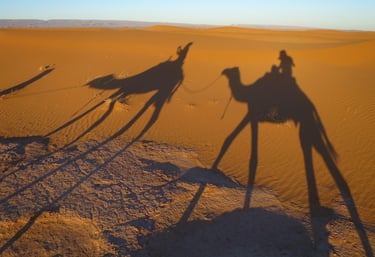
The desert safari had all the subtlety of a fairground ride. Our driver hammered the jeep over a razor-backed dune and my stomach relocated into my throat. The camel ride that followed was even stranger: the animal groaned and lurched up leg by leg, and for a few minutes all I could hear was the creak of leather and the dry whisper of sand underfoot. We stopped at a Bedouin camp where the tea was cardamom-sweet and the sun sank so violently orange it hurt to look straight at it. Darkness dropped like a curtain. Then the stars came out — not the polite scatter you see in Europe, but a dense, churning spill of light, the Milky Way so heavy it looked like someone had dragged a paintbrush across the sky.
Cairo: Sweat, Touts, and Something Ancient
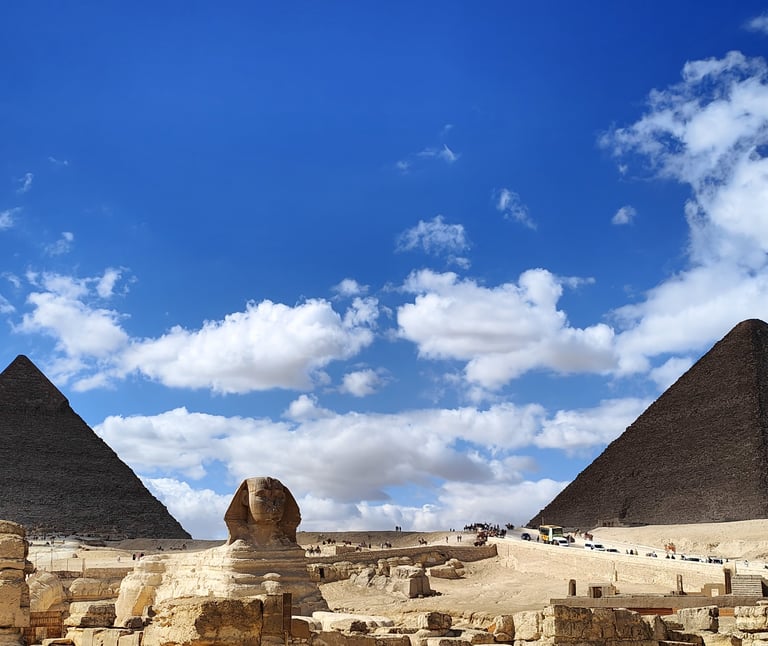
I flew from Hurghada to Cairo in just over an hour. The heat at Giza was a different species — thick, dusty, and personal. I stepped out of the car into a wall of noise: touts shouting, camels groaning, a teenager pressing a plastic pharaoh mask into my hand before I could blink. I felt hunted. Then I looked up at the pyramids, and the noise didn’t disappear, but it suddenly belonged to something much larger than me. They weren’t pretty. They were massive and indifferent, so aggressively there that I forgot to take a photo for a solid ten minutes. My mouth hung open; flies investigated; I didn’t care.
The Great Sphinx was smaller than I’d expected, its face rubbed smooth by millennia, and the missing nose made it look like a monument that had seen too much. A guide I’d hired — a calm, chain-smoking man named Sayed — gently blocked a tout who’d followed me halfway across the plateau and murmured, “They built these with skilled workers, you know. Not slaves.” That small correction landed harder than any tour script. It turned the pyramid from a tomb into a paid contract, a job, a human project. I saw it differently after that.
A few things I got wrong: I started too late and paid for it in sweat; I didn’t carry enough water and bought an overpriced bottle from a kid who looked at my desperation and doubled the price; I forgot to bring cash in small denominations and fumbled awkwardly with a 200-pound note when I needed ten.
In the Egyptian Museum, the air conditioning had failed in the Tutankhamun wing and the heat stewed with the smell of old paper and bodies. I circled the golden mask three times, my shirt soaked, and felt the strange ache of trying to hold onto an image I knew memory would erode.


Luxor: Columns, Cartouches, and the Taste of Karkadeh
A short flight south, and Luxor settled over me like a slower, deeper breath. I stayed on the West Bank, among mud-brick lanes and roosters that began their deranged 4:30am chorus without fail. Jet lag and chickens are a potent combination.
Karnak Temple at dawn was almost mine. I walked into the hypostyle hall feeling insect-small beneath 134 columns, and the early light cut through the gaps in long, dusty bars. A caretaker in a stained galabeya appeared from behind a fallen obelisk and gestured for me to follow. I hesitated — was this a scam? A tip extraction? He pointed a trembling finger at a barely visible cartouche of a queen whose name I didn’t recognize. No words, just a finger and a gummy smile. I gave him 50 Egyptian pounds and felt unexpectedly moved.
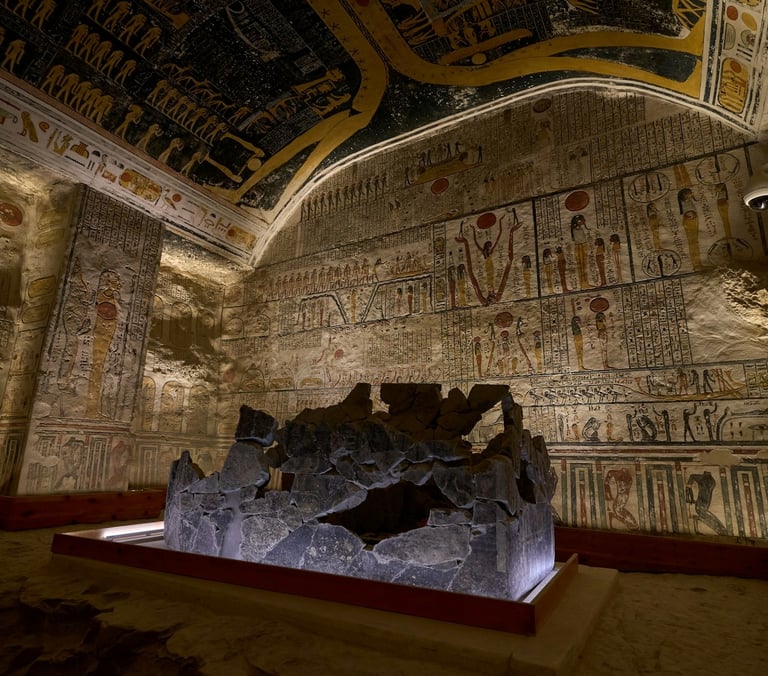
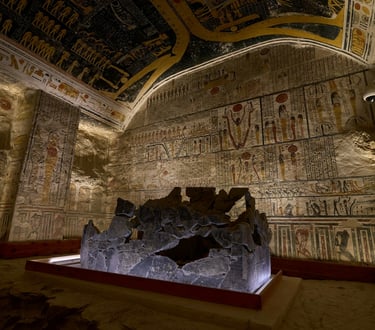
Across the river, the Valley of the Kings was a furnace. The tombs burrowed deep and hot, the air thick and still, and the hieroglyphics inside looked wet, as if painted hours ago. The blues in Ramesses VI’s burial chamber stayed printed behind my eyelids for the rest of the day. Photography is possible inside some tombs, but you pay extra and they check your ticket with an intensity that made me feel like a smuggler. I ran out of water halfway up the sun-blasted path and had to buy another from a boy I’d already refused once. Small failures accumulate, and the desert doesn’t care.
Luxor’s souk at dusk was a body punch of sounds and smells: hot oil, burning hashish, a donkey braying somewhere behind the spice stalls. I ate a date so sweet it made my teeth ache, drank karkadeh from a chipped glass while men played dominoes on a rickety table, and felt finally, completely unmoored from any itinerary. That evening I didn’t take a single photograph.
I left Luxor on a hazy afternoon, the Nile shrinking to a thread beneath the plane. Egypt had not been gentle. It had sweated me out, chewed me up, and on one memorable occasion scammed me out of 15 euros for a plaster pharaoh that broke in my bag before I even left the airport. But I swam with angelfish, stood beneath columns older than any language I speak, and in the quiet of a desert night felt the Milky Way press against my skin. Some places ask you to relax. Egypt doesn’t ask — it demands you show up with all your senses, your patience, and your willingness to be a little bit broken open. I’d do every last blister and bad decision again in a heartbeat.


Practical Details (What I Wish I’d Known)
Visa: Most EU, UK, and North American passport holders can get an e-visa online before travel (around £25, single-entry, 30 days). You can also buy a visa on arrival at the airport for the same price in cash — keep US dollars, euros, or pounds handy, small bills are easiest. Queues at the visa counter can be long; I’d pay for the e-visa purely to skip one extra line.
SIM cards & connectivity: Vodafone and Orange kiosks at Hurghada airport sell tourist data packages. I paid about E£450 (£7) for 20GB, good for two weeks, and they installed it on the spot. Coverage was decent even in the desert and along the Nile — Luxor’s West Bank was patchy but usable. Hotel Wi-Fi was often sluggish; having my own data saved me repeatedly. If you wait to buy in town, the same packages cost less but require more paperwork.
Getting around: Uber works smoothly in Cairo and Luxor. In Hurghada, Careem is more common; both apps let you avoid haggling over fares and give clear pricing upfront. For internal travel, I used EgyptAir flights (Hurghada–Cairo, Cairo–Luxor, Luxor–Cairo) which cost £40–£60 per leg when booked a few weeks ahead. GoBus runs air-conditioned coaches from Hurghada to Cairo for around £12 (6 hours), and the Cairo–Luxor sleeper train costs 80–100. If you drive, be warned: Egyptian traffic is an extreme sport.
Safety & tipping: Uber is generally safer and less hassle than street cabs, especially after dark. Tipping (“baksheesh”) is expected for most small services — carry a stash of E£5 and E£10 notes and hand them freely to washroom attendants, site guardians, and helpful strangers.

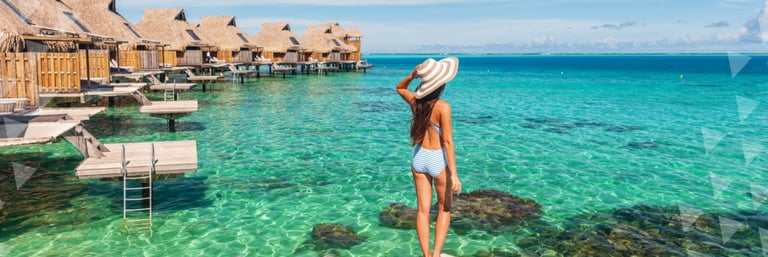
When to go & what to pay to get there: October to April is ideal — daytime temperatures sit in the mid‑20s to low 30s (°C), and the sea stays warm for swimming. I went in late February and found sunny days, manageable crowds, and none of the brutal 40°C+ summer heat. Direct flights from Europe and the UK land at Hurghada International (HRG). Return fares booked 6–10 weeks out typically range around: London £130–£330, Paris €150–€370, Berlin €140–€350, Amsterdam €160–€380, Rome €120–€290. Budget carriers like easyJet and Wizz Air serve the route seasonally; spring and autumn offer a happy balance of price and weather.
Where I stayed:
Hurghada — Sunrise Holidays Resort (adults only, reef access, all-inclusive doubles from €85/night in shoulder season). Budget: Meraki Resort (boho-luxe, from €50/night B&B).
Cairo — Guardian Guest House (pyramid views from the bed, rooftop breakfast, double from €40/night). Splurge: Marriott Mena House (pool practically touches the pyramids, from €200).
Luxor (West Bank) — El Mesala Hotel (family-run, Nile views, double from €35/night including breakfast). Splurge: Al Moudira Hotel (palatial domes and antiques, from €120/night).
For Accommodation Ideas, Explore the Map Below
All Rights Reserved
© www.affordabletravel4u.com
Travel Info
Travel Advice