

ETIAS for UK Travellers: Everything You Need to Know About Europe’s New Entry Requirement
Published by V.S. Journeys
If you’re a British passport holder who loves popping over to Europe for a city break or a beach holiday, there’s a change on the horizon. Starting in 2026, you’ll need an ETIAS travel authorisation before travelling to most European countries. Alongside it, the EU is also rolling out the Entry/Exit System (EES) to tighten border security and keep better track of arrivals and departures.

Posted on 9. May 2026
For decades, UK citizens enjoyed visa‑free roaming across much of Europe. But since Brexit, Britain is no longer part of the EU, and that comes with new travel rules. ETIAS – short for the European Travel Information and Authorisation System – is not a visa. Think of it as a visa waiver for travellers from countries that previously didn’t need any pre‑approval, including the UK.
What exactly is ETIAS?
ETIAS is a digital entry requirement for people from visa‑exempt nations. It’s designed to screen travellers before they reach the Schengen Area – that’s 27 EU countries plus neighbours like Norway, Iceland, and Switzerland. In total, ETIAS will be required for entry into 30 European countries (all Schengen members plus Cyprus, which is in the process of joining). The only major exception is Ireland, thanks to the Common Travel Area with the UK.
The system is set to go live sometime in 2026. It applies to short stays of up to 90 days within any 180‑day period, for purposes like tourism, business, medical visits, or simply transiting through a European airport. You cannot live, study, or work in the EU with an ETIAS – for that, you’d need a proper visa or residence permit.


Why is the EU bringing in ETIAS?
The goal is simple: improve safety. By checking travellers before they set off, the EU hopes to identify people with security concerns, serious criminal records, or other risks before they arrive at the border. It’s very similar to systems already used elsewhere – the US has ESTA, Canada has eTA, and Australia uses ETA. ETIAS works the same way: an online form, a small fee, and a few days of processing.
EU officials say ETIAS will help:
Strengthen border control by knowing who’s coming in advance.
Prevent threats by cross‑checking applications against multiple security databases (Interpol, Europol, the Schengen Information System).
Speed up entry at airports and land borders for approved travellers.
Who needs to apply?
You will need an ETIAS if:
You hold a British passport.
You plan to visit any of the 30 ETIAS‑required countries.
Your trip is for 90 days or less within a 180‑day window.
You’re travelling for tourism, business, medical reasons, or transit.
You do not have residency or a long‑term visa for a Schengen country.
This applies whether you fly, take the train (including Eurostar), drive, or arrive by ferry or cruise ship.
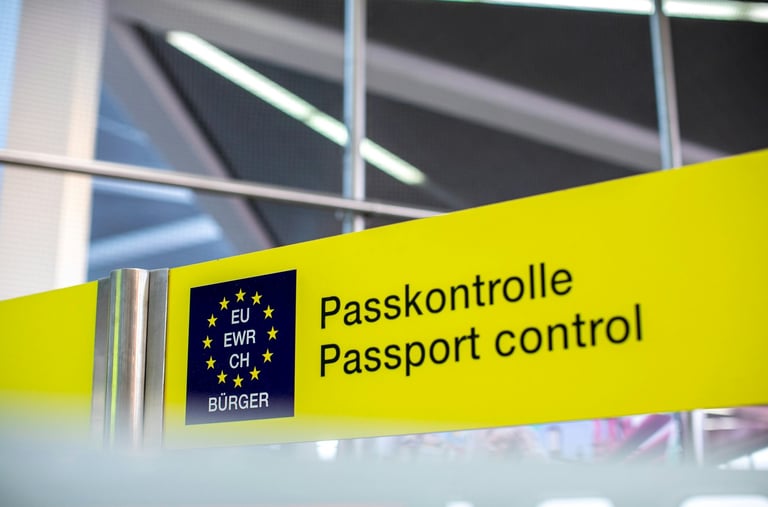
Do transit travellers need ETIAS? Yes, if you leave the international transit area. For example, flying from London to Bangkok with a layover in Frankfurt – and you want to go into the city – you’ll need ETIAS.
Short‑term business travellers also need ETIAS for meetings or conferences. But it does not allow paid work – that requires a work visa.
Who is exempt?
Not everyone from the UK needs ETIAS. Exemptions include:
British citizens with EU residency – if you hold a residence permit for a Schengen country, you don’t need ETIAS to enter that country. However, you might still need it when travelling to another Schengen nation.
Dual citizens travelling on an EU passport – use your EU passport and you’re fine. Use your British passport, and ETIAS is required.
Travellers to Ireland – Ireland is not in the Schengen Zone, and the CTA allows UK citizens to visit without any travel authorisation.
Holders of long‑term Schengen visas – if you already have a visa for study, work, or family reunion, you don’t need ETIAS for that country.


Still confused? A quick summary:
People living in the UK who don't hold EU nationality → ETIAS is required.
British citizens whose only residency is in Ireland → ETIAS is required when travelling to Schengen countries.
Dual citizens travelling on a British passport → ETIAS is required.
British citizens with residency in an EU country → ETIAS is not required for that country of residence.
What about criminal records or past visa issues?
ETIAS applications are checked against European security databases. Minor offences like a speeding ticket or a one‑off public disturbance are unlikely to cause problems. But serious crimes – violent offences, drug trafficking, terrorism – can lead to rejection. If you’ve overstayed the 90‑day rule before or been refused entry to an EU country, your application may be flagged.
Passport rules: Your passport must be valid for at least three months beyond your planned departure from the Schengen Zone. It must also be a biometric (chip‑enabled) passport. Passports older than ten years may not be accepted.
How to apply for ETIAS
The application process is entirely online – via the official ETIAS website or a mobile app. Here’s what you’ll need:
A valid biometric passport.
An email address.
A debit or credit card to pay the fee.
The form takes about ten minutes to complete. You’ll be asked for personal details, passport information, your first intended Schengen country, and a few security questions about criminal history and past travel.
Processing time
Most applications are approved within minutes. However, if there are issues – mistakes on the form, a criminal record to review, or a security database match – it can take up to 96 hours (4 days). In some cases, the EU may request additional documents or even invite you for an interview, which can extend processing to 14 or even 30 days. That’s why you’re advised to apply well before booking your flights or accommodation.
Fee structure:
Adults aged 18 to 70 pay €7.
Children under 18 are exempt from the fee.
Seniors over 70 also pay nothing.
Validity and using your ETIAS
Once approved, your ETIAS is electronically linked to the passport you applied with. It’s valid for three years or until that passport expires – whichever comes first. If you get a new passport, you’ll need a fresh ETIAS.
With a valid ETIAS, you can enter the 30 European countries as many times as you like, as long as you respect the 90‑day limit within any 180‑day period. Note that Cyprus has a separate calculation: time spent there does not count towards the 90 days in the rest of the ETIAS zone.
Does ETIAS guarantee entry?
No. ETIAS only gives you permission to travel to the border. The final decision rests with the border guard when you arrive. They will scan your passport, check your ETIAS status, and may ask for proof of funds, accommodation, or return travel. If you don’t meet the entry conditions, you can still be refused entry – even with an approved ETIAS.
Common myths – busted
Myth: ETIAS is a visa. False. It’s a visa waiver for visa‑exempt travellers. Visa‑required nationals are not affected.
Myth: You need ETIAS for every trip. No – it’s valid for three years.
Myth: Only air travellers need it. Wrong. It applies to flights, trains, ferries, and car crossings.
Myth: ETIAS takes months to get. Most applications are processed in minutes or a few days.
Myth: It covers the UK and Ireland. No. ETIAS does not apply to the UK (non‑EU) or Ireland (not in Schengen).


Your ETIAS checklist
Apply well in advance – before buying tickets or booking accommodation.
Ensure your passport details exactly match those on your ETIAS application.
Check that your ETIAS is still valid.
Confirm your passport’s validity: at least three months beyond your intended departure date from the Schengen Zone.
Remember that ETIAS doesn’t guarantee entry – border guards have the final say.
Final thoughts
ETIAS is coming in 2026, and for most British travellers, it will be a simple, low‑cost online step before heading to Europe. It’s not designed to be a barrier – just a smarter, safer way to manage borders. By applying early, checking your passport, and understanding the 90/180‑day rule, you can keep your European trips as smooth and stress‑free as ever.
If your application is ever refused, you’ll receive an email explaining why and how to appeal. In some cases, you may need to apply for a traditional Schengen visa instead.
So, before you book that next weekend in Paris or a business trip to Berlin, make ETIAS part of your planning. A few minutes online could save a lot of hassle at the gate.
All Rights Reserved
© www.affordabletravel4u.com
Travel Info
Travel Advice